Record‑high trade in 2025 and a surge in AI‑driven chip demand are forcing capital to move from legacy assets toward digitally integrated, climate‑resilient projects. The shift accelerates institutional rebalancing and redefines pathways for career advancement across sectors.
The convergence of three macro forces—geopolitical fragmentation of supply chains, rapid digitalization of asset management, and AI‑fuelled semiconductor demand—creates a structural inflection point for the Industry & Global Trends sector. Institutions that can marshal career capital to navigate these systemic changes will command new leadership roles, while workers lacking digital fluency risk marginalization. This analysis maps the mechanisms, implications, and emerging opportunities shaping the next three years.
The 7% rise in global trade last year pushed volumes past $35 trillion, but UNCTAD warns that 2026 will see slower expansion amid rising geopolitical tensions. As nations hedge against supply‑chain disruptions, regional trade blocs and near‑shoring initiatives are gaining prominence, redirecting investment toward logistics hubs and digital customs platforms. According to Career Ahead’s analysis of the UNCTAD trade data, the record growth in 2025 signals a pivot from a globally integrated model to a more layered, resilient network. Institutional investors are consequently reallocating funds from traditional maritime assets to inland intermodal facilities that promise lower geopolitical risk and higher data transparency. This reallocation reshapes the hierarchy of capital, elevating assets that combine physical infrastructure with real‑time analytics.
Global trade reached $35 trillion in 2025, a record driven by accelerated digital flows.
Consequently, talent pipelines in hardware engineering, AI algorithm development, and supply‑chain analytics become critical levers of competitive advantage.
Deloitte’s 2026 semiconductor outlook highlights AI computing as the dominant demand driver, shifting chip design toward specialized accelerators and high‑bandwidth memory. This transition compresses product cycles, forcing manufacturers to adopt more flexible, fab‑less models and to locate production nearer to AI‑focused data centers. The resulting supply‑chain reconfiguration reduces reliance on legacy fabs in East Asia, prompting a surge in capital spending on advanced lithography equipment in the United States and Europe. The structural shift also raises the barrier to entry for firms lacking deep AI expertise, concentrating market power among a handful of integrated players. Consequently, talent pipelines in hardware engineering, AI algorithm development, and supply‑chain analytics become critical levers of competitive advantage.
The intertwined trends in trade and semiconductors amplify asymmetries in institutional influence. Large sovereign wealth funds and pension managers, equipped with long‑term horizons, are channeling assets into climate‑aligned logistics and AI‑ready manufacturing zones, reinforcing their governance clout over emerging ecosystems. Simultaneously, the fragmentation of trade routes creates pockets of localized economic growth, offering upward mobility for professionals who can navigate regional regulatory frameworks and digital trade platforms. However, the concentration of AI‑centric R&D in a few hubs limits geographic career mobility, compelling workers to acquire niche skill sets or relocate to maintain relevance. This rebalancing of power underscores the need for strategic career capital—technical fluency, cross‑border regulatory knowledge, and data‑driven decision‑making.
Human capital response: building the new leadership pipeline
Career Ahead’s framework for capital reallocation identifies three structural levers: digital fluency, sustainability expertise, and geopolitical agility. Executives who master data‑centric supply‑chain oversight can steer firms through fragmented trade environments, while engineers proficient in AI chip architectures command premium compensation. In the real‑estate arena, PwC notes a pivot toward “green‑retrofit” projects and secondary‑city developments, demanding professionals versed in ESG metrics and urban digital twins. Institutions are increasingly embedding rotational programs that rotate talent across trade logistics, semiconductor R&D, and sustainable property development, cultivating leaders capable of orchestrating cross‑sectoral capital flows. Workers who proactively acquire certifications in AI hardware, ESG reporting, and international trade law position themselves at the nexus of the emerging capital hierarchy.
Career Ahead’s framework for capital reallocation identifies three structural levers: digital fluency, sustainability expertise, and geopolitical agility.
Trajectory to 2029: a re‑balanced global ecosystem
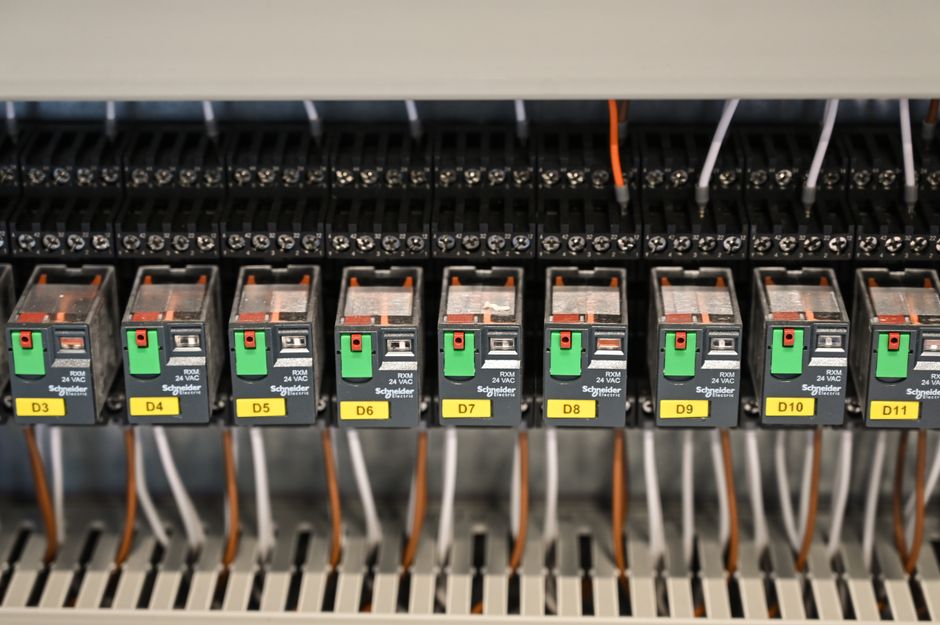
Schneider Electric's $23 billion acquisition of PTC marks a pivotal moment in the AI landscape, creating new job opportunities and driving innovation across various sectors.
Over the next three to five years, the capital landscape will likely settle into a tiered structure: (1) digital‑enabled trade corridors anchored by AI‑optimized logistics, (2) climate‑resilient real‑estate clusters integrating renewable energy and smart infrastructure, and (3) AI‑centric semiconductor hubs with localized supply chains. Institutional investors are expected to increase allocations to these tiers by measurable shares, while public policy will incentivize cross‑border data standards to ease friction. Professionals who align their career capital with these tiers—through continuous upskilling in AI, ESG, and digital trade—will find amplified leadership pathways. The sector’s trajectory suggests that the asymmetry between digitally adept firms and legacy operators will widen, cementing a new hierarchy of institutional power and career mobility.
The evolving capital hierarchy will reward those who translate digital and sustainability expertise into strategic influence, reinforcing the sector’s structural shift toward integrated, resilient growth.
Key Structural Insights
[Insight 1]: Record global trade in 2025 and AI‑driven chip demand are jointly prompting institutions to reallocate capital toward digitally integrated, climate‑resilient assets.
[Insight 1]: Record global trade in 2025 and AI‑driven chip demand are jointly prompting institutions to reallocate capital toward digitally integrated, climate‑resilient assets.
[Insight 2]: Geopolitical fragmentation is creating regional trade hubs, elevating logistics and data‑centric platforms as new centers of institutional power.
[Insight 3]: Career capital built on AI hardware, ESG proficiency, and cross‑border trade fluency will become the primary lever for leadership in the re‑balanced global ecosystem.





 AI & Technology
 AI & Technology
AI & Technology