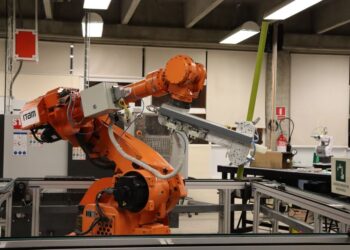
Agile Robots, a German robotics startup, aims to double its revenue to 600 million euros by 2026 through strategic acquisitions and manufacturing expertise, reflecting a significant trend in the global robotics industry focused on automation.
German robotics startup Agile Robots plans to double its revenue by 2026. The company expects to earn about 600 million euros (around $690 million). This growth comes from its manufacturing expertise and strategic acquisitions. Agile Robots aims to become a leader in the robotics sector.
CEO Zhaopeng Chen mentioned that Agile Robots has secured customer contracts to support this revenue goal. The company has raised about $1.5 billion from investors, including significant support from SoftBank Group. This funding will help Agile Robots expand its operations and improve its products, especially in industrial automation.
Strategic Acquisitions Fueling Growth
Since its start in 2018, Agile Robots has acquired over a dozen companies. Notable acquisitions include thyssenkrupp Automation Engineering. These purchases are not just about revenue; they also bring valuable expertise and established connections in manufacturing. Research from Career Ahead shows that companies with strong industrial ties have an edge over newer startups.
Chen emphasized that Agile Robots focuses on embedding its robots in real-world factory settings. The company addresses practical challenges instead of aiming for a complete humanoid robot right away. This strategy helps build trust with clients and shows the effectiveness of its technology in production environments. The Wall Street Journal notes that Agile Robots is relying on its manufacturing expertise, not just AI advancements, to drive revenue and profits.
Career Ahead’s analysis finds that Agile’s use of existing industrial automation knowledge is vital for its projected revenue growth. By integrating advanced robotics into established manufacturing processes, Agile Robots boosts productivity. This also creates new job opportunities for robotics engineers who design and implement these systems. As the company innovates, it is expected to attract top talent, especially in AI and machine learning, which are crucial in robotics.
Career Ahead’s analysis finds that Agile’s use of existing industrial automation knowledge is vital for its projected revenue growth.
The tightening of bench policies in India's IT sector reflects a significant transformation in workforce management, impacting job security and project allocation.
Additionally, Agile Robots’ partnership with Google DeepMind aims to add advanced AI to its robots. This collaboration will improve the decision-making abilities of its robots, helping them adapt to complex environments. A report by Robotomated highlights that AI integration in robotics is a significant trend shaping the industry’s future. Agile’s initiatives are timely and relevant.
Job Opportunities and Investment Potential in Robotics
The expected revenue growth at Agile Robots reflects a larger trend in the robotics industry. Automation is becoming essential in manufacturing. As companies seek to improve efficiency and cut costs, demand for robotics solutions will likely rise. This creates a strong environment for investment in robotics startups, as venture capitalists aim to benefit from the growing market.
Data from Robotomated shows that the robotics sector will see significant investment in the coming years. Many startups are focusing on niche areas within automation. This influx of capital will help these companies innovate and grow, leading to more job creation. The increasing complexity of robotics systems requires skilled professionals to design, implement, and maintain them.
For robotics engineers, this means many opportunities in various roles. These roles include design, development, implementation, and maintenance of robotic systems. Career Ahead’s analysis indicates that engineers skilled in AI integration and industrial automation will be in high demand. These skills are critical for the next generation of robotics solutions. As Agile Robots prepares for growth, the implications for the robotics workforce are significant. The company’s success may signal a shift toward more automated solutions across different sectors.
As the industry evolves, startup founders in technology must adapt their strategies to attract investment. Building relationships with established companies and showing the practical applications of their technologies will be crucial. The focus will shift from just developing innovative products to ensuring these products can integrate into existing systems. Additionally, the growing complexity of robotics systems will require ongoing education and skill development for professionals. Robotics engineers must stay updated on emerging trends and technologies, especially in AI and machine learning, to remain competitive.
Understanding this growth projection is essential for those monitoring economic trends and investment opportunities. The anticipated growth is expected to be supported by a rebound…
With Agile Robots leading the way, it will be interesting to see how other companies respond. Will they invest heavily in robotics, or will they wait to see the results of Agile’s strategies? The future of the robotics sector is set for transformation, and Agile Robots is at the forefront of this change, setting a standard for innovation and growth in the industry.
Additionally, the growing complexity of robotics systems will require ongoing education and skill development for professionals.
Frequently Asked Questions
What skills are needed for robotics engineers in growing startups?
Robotics engineers in growing startups need a strong foundation in mechanical engineering, programming, and AI integration. Skills in machine learning and automation processes are increasingly valuable as companies develop advanced robotic systems.
How can startup founders attract investment in the robotics field?
Startup founders can attract investment by showing the practical applications of their technology and building partnerships with established firms. Highlighting successful pilot projects and the scalability of their solutions will also attract investors.
What trends should robotics engineers watch in 2026?
Robotics engineers should pay attention to AI integration in automation, the rise of humanoid robots, and advancements in machine learning. Understanding these trends will be crucial for developing competitive skills in the evolving market.



Industry & Global Trends
 Industry & Global Trends