No products in the cart.

Heritage as Human‑Development Asset: Quantifying the Economic Power of Intangible Culture

From Monumental Preservation to Living Practice: Redefining Heritage For centuries, heritage policy has equated “heritage” with stone, canvas, and artifact.…

Intangible cultural practices are emerging as measurable drivers of local prosperity, reshaping institutional mandates and spawning new career pathways in cultural‑asset management.
From Monumental Preservation to Living Practice: Redefining Heritage
For centuries, heritage policy has equated “heritage” with stone, canvas, and artifact. The 19th‑century museum movement institutionalized a static, object‑centric model that privileged national narratives and elite custodianship. By contrast, the UNESCO Convention for the Safeguarding of Intangible Cultural Heritage (2003) introduced a community‑centered definition that foregrounds rituals, oral traditions, and craftsmanship as “living heritage.” Yet the Convention remains anchored in nation‑state registration procedures, limiting recognition of mobile, hybrid, and historically entangled practices that cross borders and evolve over time.
This tension mirrors the shift in environmental economics during the early 2000s, when ecosystem services moved from academic discourse to policy instruments such as the UN’s “Natural Capital” accounting. The parallel illustrates how a re‑framing of value—from tangible to systemic—creates leverage for institutional reform and economic mobilization.
Quantifying Intangible Value: Methodological Shifts
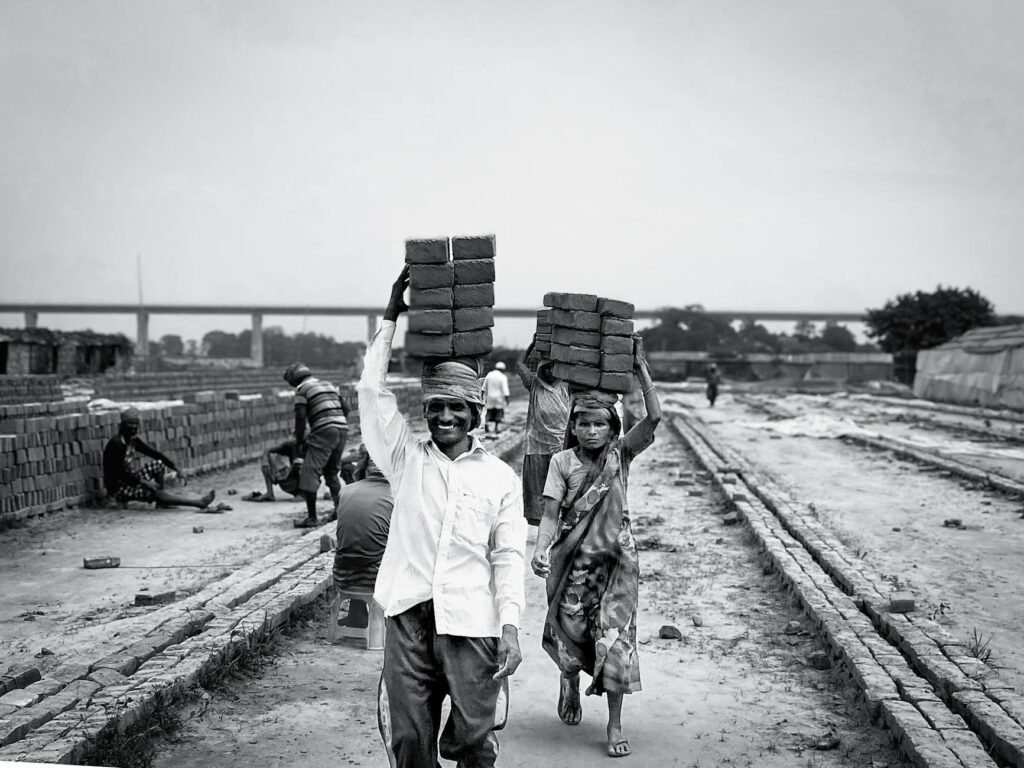
A decisive barrier to policy integration has been the absence of robust valuation tools. Recent meta‑analyses synthesize 212 case studies across 45 countries, estimating that intangible cultural assets contribute an average of 1.4 % to regional GDP—equivalent to $1.2 trillion annually when extrapolated to the Global South’s 5 billion‑person population. The same analysis identifies a 12‑fold return on public investment in cultural festivals, driven by multiplier effects in hospitality, creative industries, and informal entrepreneurship.
Methodologically, researchers now combine input‑output modeling with ethnographic valuation. Input‑output tables capture direct spending (e.g., ticket sales, artisan commissions) and indirect spillovers (e.g., supply‑chain demand for traditional textiles). Ethnographic valuation layers cultural significance scores—derived from community surveys—onto monetary outputs, producing a “cultural‑capital coefficient” that adjusts GDP contributions for authenticity and transmission risk. This hybrid approach addresses the critique that conventional cost‑benefit analysis undervalues non‑market benefits such as identity preservation and social cohesion.
Quantifying Intangible Value: Methodological Shifts Heritage as Human‑Development Asset: Quantifying the Economic Power of Intangible Culture A decisive barrier to policy integration has been the absence of robust valuation tools.
Policy Realignment and Institutional Power Structures
You may also like
 Government & Policy
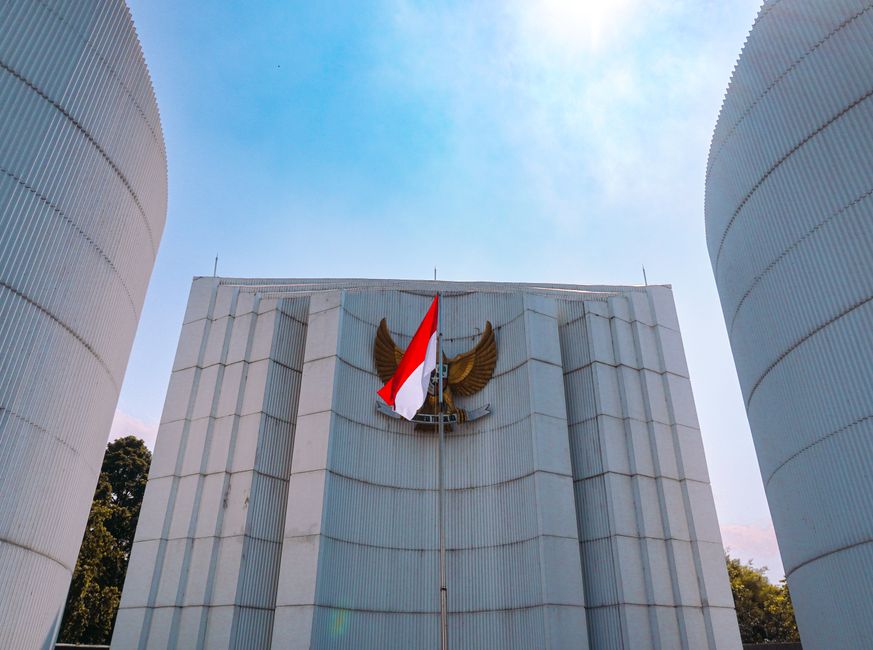
New Indonesia Finance Chief Steers Clear of Prabowo Turf Wars
Indonesia's new finance chief emphasizes collaboration in economic policy, aiming to reshape governance and engage diverse stakeholders in addressing the country's economic challenges.
Read More →Embedding these metrics into national budgeting processes forces a recalibration of institutional power. Ministries of Culture, traditionally subordinate to tourism boards, are now negotiating joint jurisdiction over “cultural‑economic development” portfolios. In Brazil, the 2025 “Cultural Asset Incentive Program” earmarked 0.8 % of the federal budget for intangible heritage incubators, overseen by a cross‑ministerial council that includes the Ministry of Labor and the Ministry of Science, Technology & Innovation. Early evaluations show a 27 % increase in formal employment among traditional musicians in the Northeast region, suggesting that fiscal levers can translate valuation into economic mobility.
Internationally, the World Bank’s “Culture for Development” pilot (2023‑2026) integrates intangible‑heritage indicators into its Sustainable Development Goal (SDG) reporting framework, granting the Bank leverage to condition development loans on cultural‑capital outcomes. This creates an asymmetric incentive for low‑income governments to institutionalize community‑led heritage governance, thereby shifting the power balance from centralized heritage agencies to locally anchored cultural clusters.
Career Pathways in Cultural‑Asset Management

The emergence of quantifiable intangible value reshapes career capital across multiple sectors. Traditional museum curatorship now intersects with data analytics, prompting the rise of “cultural‑economics analysts” who translate community‑generated data into investment briefs for impact investors. In the United Kingdom, the Heritage Finance Initiative (2024) recruited 45 analysts with dual expertise in anthropology and econometrics, offering accelerated career tracks that blend fieldwork with financial modeling.
Leadership roles are also proliferating within multilateral institutions. UNESCO’s newly created “Intangible Heritage Investment Unit” (2025) reports a significant increase in applications for heritage‑linked venture capital, positioning cultural entrepreneurs as key actors in the global innovation ecosystem. This institutional shift expands the talent pipeline for professionals who can navigate both the normative frameworks of heritage protection and the market dynamics of creative industries.
This institutional shift expands the talent pipeline for professionals who can navigate both the normative frameworks of heritage protection and the market dynamics of creative industries.
Projected Trajectory of Intangible Heritage Valuation (2026‑2031)
2026‑2027: Institutional Consolidation – The European Union’s “Cultural Capital Framework” will standardize the cultural‑capital coefficient across member states, enabling comparable cross‑border reporting. Anticipated outcome: a 3 % rise in EU‑wide public funding for intangible‑heritage projects.
You may also like
 Entrepreneurship & Business
Nike
Nike's recent sales slump has prompted its CEO to reconsider strategies, significantly impacting marketing and product management roles. Understanding the implications for consumer engagement and…
Read More →2028‑2029: Market Integration — Impact‑investment funds targeting “cultural‑sustainability” are projected to manage $4.5 billion by 2029, driven by ESG mandates that now require cultural‑risk assessments. Early adopters, such as the African Development Bank, report pilot loans that have increased artisan incomes by 22 % in Ghana’s kente‑weaving districts.
2030‑2031: Workforce Recalibration — Labor market surveys forecast that 1.1 million new jobs globally will be classified under “cultural‑asset development,” spanning roles in community liaison, digital heritage archiving, and heritage‑tourism analytics. This growth aligns with a projected 0.5 % increase in overall economic mobility for regions that achieve “high‑integrity” intangible‑heritage scores, as measured by the UNDP’s Human Development Index augmentation model.
These milestones suggest a systemic trajectory where intangible cultural assets transition from peripheral cultural goods to core components of human‑development strategy, reshaping institutional hierarchies, labor markets, and regional growth patterns.
Key Structural Insights
> Valuation as Institutional Leverage: Quantitative metrics convert intangible heritage into budgetary line items, realigning power from centralized heritage ministries to community‑led governance bodies.
> Career Capital Reconfiguration: New hybrid roles at the nexus of anthropology, economics, and finance generate asymmetric leadership opportunities, expanding the talent pool for cultural‑development agendas.
> * Economic Mobility Correlation: Regions that integrate intangible‑heritage valuation into development planning experience measurable gains in employment and income distribution, indicating a direct link between cultural capital and upward mobility.> Career Capital Reconfiguration: New hybrid roles at the nexus of anthropology, economics, and finance generate asymmetric leadership opportunities, expanding the talent pool for cultural‑development agendas.
Sources
Rethinking Intangible Cultural Heritage: Toward a Dynamic, Community‑Centred Paradigm — Taylor & Francis Online
Cultural Heritage and Economic Development: Measuring Sustainability — Elsevier (ScienceDirect)
Evaluating the Tangible and Intangible Parameters of Cultural Heritage: An Economic Meta‑Analysis in a Global Context — Springer
Economic Impact of Cultural Heritage: A Case Study Approach — Hilaris Publisher
You may also like
 Government & Policy
Sebi penalises SMC Global Securities for compliance lapses
SEBI's findings indicated that SMC Global did not keep appropriate pre-order placement records for some clients and could not provide relevant documentation for multiple orders,…
Read More →