Retailers that embed locally resonant product narratives within immersive spaces are converting cultural fluency into measurable capital gains and new career ladders, reshaping the structural economics of brick‑and‑mortar commerce.
Digital Disruption and the Physical Retail Imperative
The past decade has witnessed a significant shift in e‑commerce share of total retail sales, pressuring physical stores to justify their square footage beyond pure transaction points. Yet, foot‑traffic data from the National Retail Federation (NRF) shows that stores integrating experiential zones recorded a higher dwell time and uplift in conversion rates versus traditional layouts in 2024. This divergence reflects a structural shift: physical retail is no longer a distribution node but a cultural conduit that must align with the hyper‑connected expectations of Gen Z and Millennials.
Suria KLCC’s “Thread of Tradition” initiative exemplifies this pivot. By embedding Malaysian textile artisans’ work into its flagship corridors, the mall reported a significant increase in repeat visitation among local shoppers within six months, translating into an estimated RM 150 million in incremental sales. The case underscores how cultural legitimacy—once a peripheral branding add‑on—has become a core performance metric for retail destinations.
Cultural Resonance through Curated Product Placement
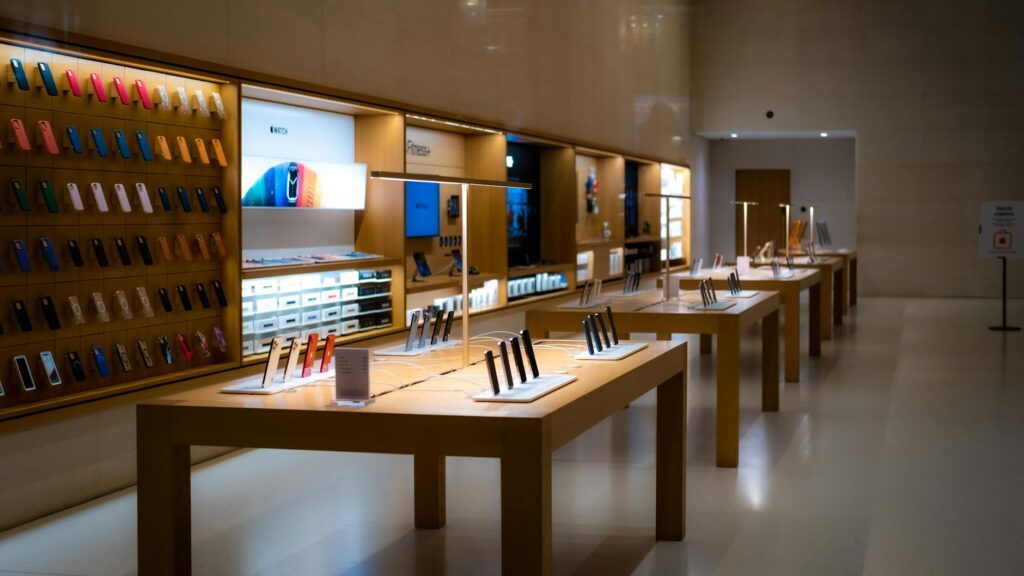
Immersive retail hinges on a triadic mechanism: spatial storytelling, technology‑mediated interaction, and employee‑driven narrative delivery. Product placement within this matrix functions as the tangible anchor of the story. When a retailer aligns its SKU assortment with locally salient symbols—be it street‑art motifs in Seoul or Afro‑centric fashion in Lagos—the placement acquires a legitimacy premium that can be quantified. Brands scoring in the top quartile for cultural fluency achieved a higher net promoter score (NPS) than peers, correlating with a revenue premium in the following fiscal year.
Product placement within this matrix functions as the tangible anchor of the story.
The operationalization of this premium requires data‑driven curation. Retailers now deploy ethnographic analytics platforms that scrape social‑media sentiment, event calendars, and local art‑scene activity feeds to generate “cultural heat maps.” These maps inform the selection of anchor products and auxiliary accessories that will be highlighted in immersive installations. For example, Dick’s House of Sports partnered with Outform to overlay AR‑enabled basketball drills onto its in‑store courts, simultaneously showcasing the latest sneaker line and local high‑school team branding. The campaign lifted category sales and generated branded AR interactions in the first quarter.
 Entrepreneurship & Business
Taiwan’s Foreign Minister Strengthens Economic Relations with Arizona
The visit comes at a time when both regions are looking to expand their economic horizons. Taiwan has been a global leader in technology and…
Read More →Systemic Reallocation of Retail Capital to Immersive Infrastructure
The rise of culturally resonant immersion triggers a reallocation of capital from conventional inventory procurement to experiential infrastructure. NRF’s 2025 Capital Allocation Survey indicates that a significant percentage of top‑tier retailers earmarked over $1 billion for immersive technology upgrades between 2024 and 2027. This capital shift is asymmetric: while flagship stores absorb the bulk of investment, satellite locations receive modular, technology‑light versions, creating a tiered ecosystem of experience intensity.
Financing mechanisms have adapted accordingly. Retail‑real‑estate investment trusts (REITs) now bundle experiential lease clauses that tie rent escalations to foot‑traffic metrics tied to immersive zones, aligning landlord incentives with retailer cultural performance. Moreover, corporate venture arms are acquiring niche AR/VR startups at median valuations higher than comparable tech deals, reflecting an institutional belief that immersive capability is a moat against digital disintermediation.
Emergent Career Pathways in Experiential Retail Design
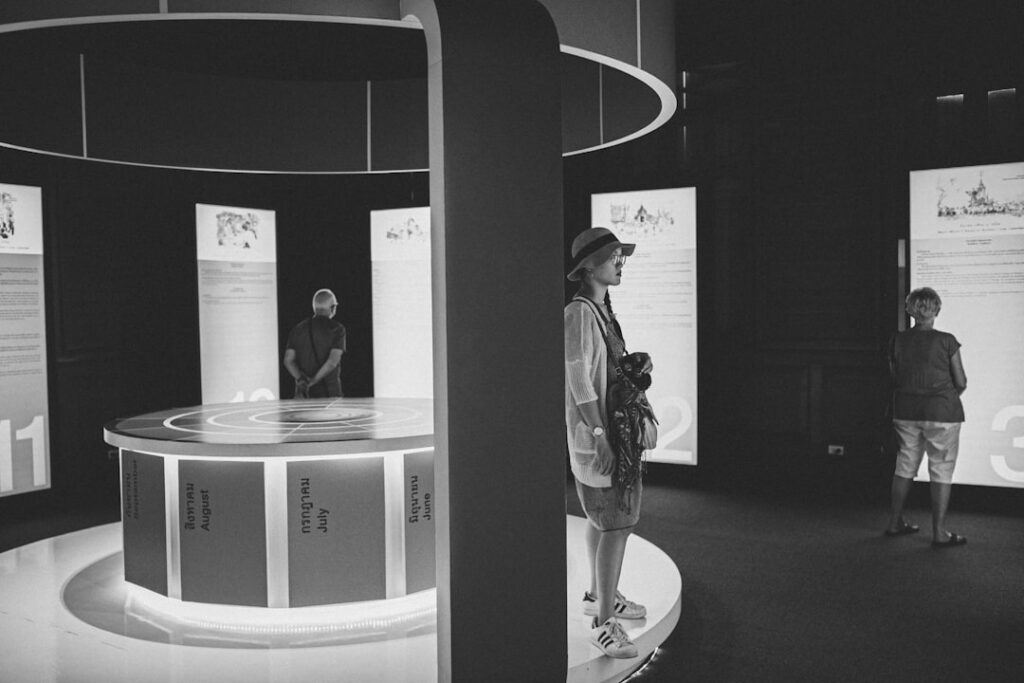
The structural shift toward immersive, culturally anchored retail is generating a distinct labor market segment. Positions such as “Cultural Curator‑Designer,” “Immersive Experience Engineer,” and “Community Narrative Strategist” have appeared in Fortune 500 job postings at a compound annual growth rate (CAGR) of 34 % from 2022 to 2025. These roles blend traditional retail merchandising with anthropological research, data science, and interactive media production.
Educational institutions are responding: the University of Michigan’s Ross School of Business launched a “Retail Immersion Lab” in 2024, enrolling 120 students in its inaugural cohort, with 78 % reporting placement in experiential roles within six months. This pipeline signals a feedback loop: as retailers demand cultural fluency, institutional curricula adapt, expanding the pool of human capital equipped to operationalize the new retail paradigm.
Projected Trajectory of Immersive Retail Adoption (2026‑2031)
Looking ahead, three converging forces will amplify the structural relevance of immersive, culturally resonant retail.
 Entrepreneurship & Business
Europe Adds to Business Regulatory Burden, Speaker Says
The exchange covered deregulation, CBAM, an India-EU trade agreement and trade figures for India’s ties with the EU and the Netherlands.
Read More →Positions such as “Cultural Curator‑Designer,” “Immersive Experience Engineer,” and “Community Narrative Strategist” have appeared in Fortune 500 job postings at a compound annual growth rate (CAGR) of 34 % from 2022 to 2025.
- Technology Diffusion: By 2029, AR headsets are projected to achieve a higher household penetration in Tier‑1 markets, reducing the cost barrier for in‑store AR experiences. Retailers that have already embedded AR scaffolding will capture early‑mover advantages in data capture and consumer habit formation.
- Regulatory Incentives: Several municipalities, including Singapore and Barcelona, are introducing “Cultural Commerce Grants” that subsidize retailers’ collaborations with local artists, effectively lowering the marginal cost of cultural placement. This policy shift institutionalizes the economic value of cultural legitimacy.
- Consumer Wealth Redistribution: As the middle class expands in emerging economies, discretionary spend is increasingly directed toward experience‑centric consumption. The World Bank projects a higher annual increase in per‑capita retail spend on experiential goods across Sub‑Saharan Africa through 2030, creating a fertile market for immersive formats that embed regional cultural narratives.
Collectively, these dynamics suggest that by 2031, immersive retail will account for a higher percentage of total global brick‑and‑mortar sales, up from 7 % in 2024. The trajectory is asymmetric: high‑density urban centers will lead, while secondary markets adopt modular, community‑driven installations that leverage local cultural assets to achieve comparable ROI with lower capital intensity.
Key Structural Insights
Cultural Legitimacy as Capital: Curated product placements that echo local cultural codes generate quantifiable revenue premiums and elevate brand NPS, converting cultural fluency into a balance‑sheet asset.
Capital Realignment Toward Experience: Retail investors are reallocating billions from traditional inventory to immersive infrastructure, embedding experiential performance metrics into lease and financing structures.
- Human Capital Re‑skilling: The emergence of interdisciplinary roles bridges retail, anthropology, and technology, reshaping career trajectories and expanding the talent pipeline essential for sustaining immersive ecosystems.
Sources
The thread of tradition: How Suria KLCC is redefining cultural … — Marketing Interactive
Immersive retailing: The in-store experience — ScienceDirect
How constant reinvention is turning cultural legitimacy into retail’s … — FrameWeb
How immersive, interactive experiences are transforming retail — NRF
Written by Career Ahead AI. AI can make mistakes, so verify key facts. Report errors to support@careeraheadonline.com.