

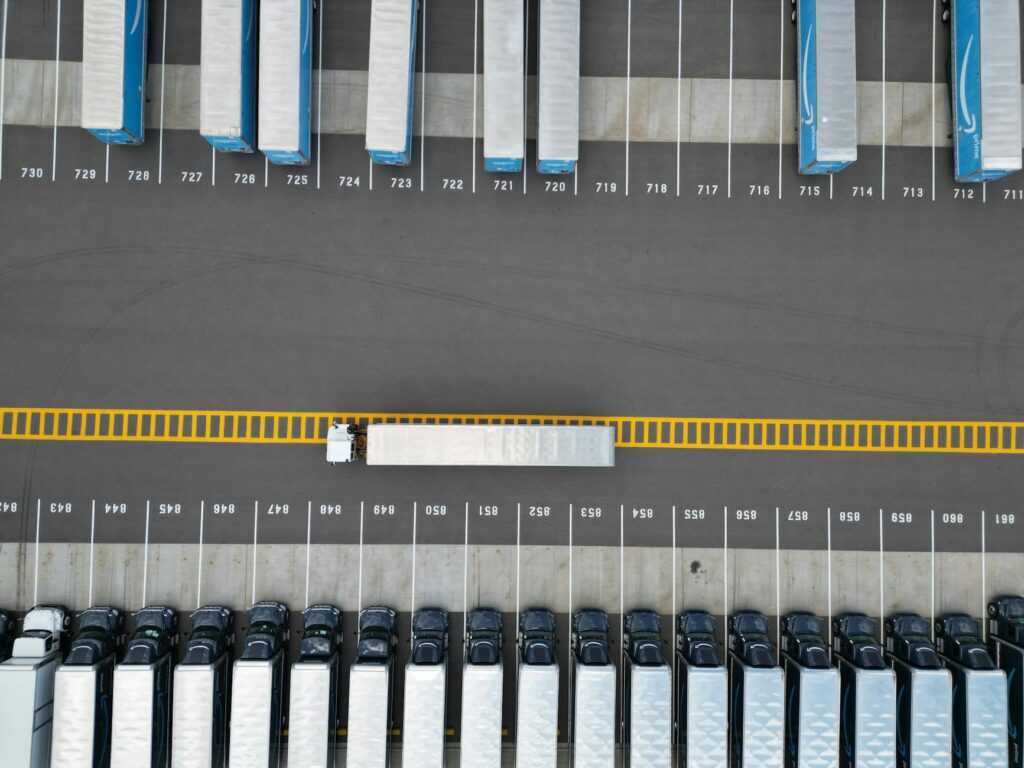
Real‑time inventory, AI‑driven routing and micro‑fulfillment nodes are converting the traditionally cost‑heavy last mile into a systemic buffer that stabilizes supply chains against demand spikes and infrastructure shocks.
E‑Commerce Scale and the Last‑Mile Cost Burden
The digital retail surge has amplified the structural pressure on the final leg of delivery. Global e‑commerce sales are projected to exceed $6.5 trillion by 2023, a trajectory first quantified in a Shopify market outlook [1]. Within that volume, the last‑mile segment absorbs roughly 53% of total logistics spend, a McKinsey logistics cost decomposition identified as the most capital‑intensive slice of the supply chain [2]. Consumer expectations have hardened into a systemic norm: a National Retail Federation poll reports 75% of shoppers now demand free, same‑day or next‑day delivery [3]. These dynamics have transformed the last mile from an operational afterthought into a strategic frontier where cost, speed and reliability intersect.
Historically, the “post‑industrial” logistics model—centralized warehouses feeding long‑haul trucks—relied on predictable, bulk shipments. The rise of e‑commerce inverted that paradigm, shifting value toward distributed fulfillment and creating an asymmetric risk profile: small‑scale disruptions (e.g., urban traffic congestion, weather events) can cascade into outsized service failures. The macro‑level pressure thus demands a structural re‑engineering of how inventory moves while in transit.
In‑Transit Fulfillment Architecture
In‑transit fulfillment (ITF) reframes the vehicle itself as a mobile warehouse. By embedding real‑time inventory visibility, dynamic routing algorithms and automated sorting mechanisms within freight assets, carriers convert the transit window into a usable storage layer. The Council of Supply Chain Management Professionals (CSCMP) outlines this architecture as a three‑tiered system: (1) sensor‑enabled pallets that broadcast location and condition, (2) cloud‑based orchestration platforms that continuously re‑optimize routes, and (3) edge‑computing nodes on trucks that execute micro‑sort operations for downstream drops [4].
Artificial intelligence amplifies each tier. Gartner predicts 75% of supply chains will integrate AI decision‑making by 2025, enabling predictive load consolidation and on‑the‑fly rerouting around congestion [5]. Blockchain provides immutable provenance for high‑value items, mitigating theft and counterfeit risk—a concern highlighted in pilot programs at major parcel carriers. The Internet of Things (IoT) supplies the telemetry needed for these decisions, with fleet‑wide adoption rates climbing to 68% among top‑tier logistics firms in 2022 [5].
The Supply Chain Management Association (SCMA) reports that firms integrating ITF reduced overall safety stock levels by an average of 18%, freeing working capital for upstream procurement [7].
Emergent business models capitalize on this infrastructure. CB Insights documents a surge in crowdsourced delivery networks that plug into ITF platforms, allowing independent couriers to claim capacity on partially loaded trucks. Simultaneously, micro‑fulfillment centers (MFCs)—often the size of a retail backroom—are co‑located with transit hubs, enabling “last‑mile‑in‑the‑middle” fulfillment that reduces dead‑head mileage by up to 22% in dense urban corridors [6]. These innovations collectively convert the last mile from a cost sink into a systemic resilience layer.
Cascade Effects on Inventory and Transportation Networks
 Industry & Global Trends
Global Trade Surprises with Unexpected Resilience
As the demand for AI technologies continues to grow, supply chain managers must adapt to the new dynamics of logistics and sourcing.
Read More →The diffusion of ITF reverberates through the broader supply chain ecosystem. First, inventory positioning shifts from static, warehouse‑centric safety stock to mobile, demand‑responsive buffers. The Supply Chain Management Association (SCMA) reports that firms integrating ITF reduced overall safety stock levels by an average of 18%, freeing working capital for upstream procurement [7].
Second, transportation planning becomes a continuous optimization problem rather than a static schedule. Machine‑learning models ingest real‑time order inflow, traffic feeds and weather forecasts to generate probabilistic route ensembles. McKinsey’s analytics benchmark shows companies that embed such data pipelines are 2.5 times more likely to outperform peers on service‑level metrics [8]. The resulting elasticity enables firms to absorb demand spikes without resorting to costly air freight or last‑minute carrier contracts.
Third, partnership structures evolve. PwC’s logistics‑technology survey highlights a rise in multi‑party orchestration consortia, where e‑commerce platforms, third‑party logistics (3PL) providers and tech startups co‑develop shared APIs for inventory visibility and order fulfillment [9]. These consortia create a governance layer that standardizes data schemas and liability frameworks, reducing friction in cross‑border e‑commerce and expanding the feasible reach of ITF into emerging markets.
Talent Realignment and Capital Flows in Transit Fulfillment
The systemic shift toward ITF reshapes career capital across the logistics spectrum. The U.S. Bureau of Labor Statistics projects a 10% growth in logistics employment through 2028, with a pronounced tilt toward roles requiring data analytics, AI model stewardship and IoT systems integration [10]. Universities and industry associations have responded with specialized curricula—e.g., the MIT Center for Transportation & Logistics now offers a “Dynamic Fulfillment Engineering” certificate, blending supply chain fundamentals with machine‑learning coursework.
Talent Realignment and Capital Flows in Transit Fulfillment The systemic shift toward ITF reshapes career capital across the logistics spectrum.
Capital allocation mirrors this talent migration. PitchBook recorded $14.4 billion in venture and private‑equity funding for logistics‑tech startups in 2022, a 38% year‑over‑year increase driven largely by platforms that enable ITF capabilities such as on‑truck inventory management and real‑time routing marketplaces [11]. Traditional carriers have also redirected internal R&D spend; DHL’s “Smart Truck” program allocated €1.2 billion over five years to retrofit its European fleet with edge‑computing and sensor suites, citing projected ROI from reduced empty‑run mileage and higher asset utilization.
 Entrepreneurship & Business
Europe Adds to Business Regulatory Burden, Speaker Says
The exchange covered deregulation, CBAM, an India-EU trade agreement and trade figures for India’s ties with the EU and the Netherlands.
Read More →The skill premium is asymmetric: data scientists and AI engineers command median salaries 30% above traditional warehouse managers, while logistics coordinators with certification in ITF platforms see promotion rates twice the industry average. This reallocation of human capital reinforces the structural advantage of firms that can attract and retain technology‑savvy talent, creating a feedback loop that accelerates adoption.
Projected Structural Shift Through 2029
Looking ahead, the convergence of regulatory, technological and market forces suggests a systemic transformation of the last mile by the close of the decade. European Union directives on “green logistics” will impose stricter emissions caps on urban freight, incentivizing the consolidation benefits inherent in ITF‑enabled route optimization. Simultaneously, the United Nations’ Sustainable Development Goal 9 emphasizes resilient infrastructure, aligning public‑private funding mechanisms with ITF pilots in low‑density regions.
By 2029, we anticipate three measurable outcomes:
- Mobile safety stock adoption exceeding 40% of total inventory buffers in top‑quartile e‑commerce firms, reducing warehouse footprint requirements by an average of 12%.
- Average last‑mile cost share declining from 53% to under 42% of total logistics spend, driven by higher truck load factors and reduced dead‑head distances.
- Labor productivity gains of 20% per logistics employee, as AI‑augmented decision tools replace manual routing and inventory reconciliation tasks.
These projections rest on the correlation between AI maturity, IoT penetration and capital efficiency documented across the last five years of supply‑chain research. Firms that fail to embed ITF into their operating model risk structural marginalization as competitors achieve asymmetric cost advantages and superior service reliability.
Data‑Driven Network Elasticity: Continuous AI‑enabled routing transforms transportation from a fixed schedule into a dynamic, risk‑responsive lattice, reducing both cost and emissions.
Key Structural Insights
Mobile Buffer Integration: Converting transit assets into inventory nodes decouples service levels from static warehouse capacity, creating a systemic shock absorber.
Data‑Driven Network Elasticity: Continuous AI‑enabled routing transforms transportation from a fixed schedule into a dynamic, risk‑responsive lattice, reducing both cost and emissions.
- Talent‑Capital Realignment: The surge in high‑skill logistics roles and venture funding creates an asymmetric advantage for firms that can marshal technology talent, reinforcing the structural shift toward in‑transit fulfillment.
Sources
[1] “Global E‑Commerce Forecast 2023” — Shopify
[2] “The Last‑Mile Cost Challenge” — McKinsey & Company
[3] “Consumer Shipping Expectations Survey 2022” — National Retail Federation
[4] “In‑Transit Fulfillment Framework” — Council of Supply Chain Management Professionals
[5] “AI Adoption in Supply Chains 2025 Outlook” — Gartner
[6] “Emerging Business Models in Urban Logistics” — CB Insights
[7] “Supply Chain Ripple Effects of Mobile Inventory” — Supply Chain Management Association
[8] “Analytics as a Competitive Differentiator” — McKinsey & Company
[9] “Collaborative Logistics Ecosystems” — PwC
[10] “Occupational Outlook Handbook: Transportation & Material Moving” — Bureau of Labor Statistics
[11] “Logistics & Supply Chain Funding Landscape 2022” — PitchBook
[12] “Last‑Mile Logistics with Alternative Delivery Locations: A Systematic Review” — ScienceDirect
[13] “Bridging the Last Mile: Challenges and Innovations in E‑commerce” — Zenodo
[14] “Last‑Mile Delivery Innovations: The Future of E‑commerce Logistics” — Springer
 Entrepreneurship & Business
Use a Business Loan to Fix Cash Flow: Five Decisions
Cash flow is the top challenge for half of small firms. Here is how to choose a loan that fits.
Read More →Written by Career Ahead AI. AI can make mistakes, so verify key facts. Report errors to support@careeraheadonline.com.





