Several state leaders, including West Bengal’s Mamata Banerjee and Assam’s Dr. Mohan Yadav, possess advanced degrees that diverge from typical political pathways.
India’s top elected officials are drawing attention in 2026 for holding doctoral and internationally recognized business qualifications, a trend highlighted in recent media profiles of state chief ministers. The reporting notes that these credentials are now cited as markers of administrative competence across multiple states, including West Bengal and Assam.
The profiles identify Mamata Banerjee, chief minister of West Bengal, as holding a Master of Arts in political science from the University of Calcutta, while Dr. Mohan Yadav, chief minister of Assam, earned a PhD in economics from an Indian university and an MBA from an Ivy-League institution in the United States. The article places these educational achievements within the broader context of Indian politics in 2026, where degrees are increasingly scrutinized by voters and party hierarchies.
Educational Backgrounds of Current Chief Ministers
The 2026 feature lists the academic qualifications of all incumbent chief ministers, noting that at least three hold doctoral degrees and two possess MBAs from U.S. business schools. Mamata Banerjee’s academic record includes a postgraduate degree earned in the early 1980s, a period during which she entered active politics. Dr. Mohan Yadav completed his PhD in 2015 and subsequently attended Harvard Business School for a two-year MBA program, graduating in 2018.
Other chief ministers highlighted in the same report include a chief minister from Karnataka who earned a PhD in engineering, and a chief minister from Kerala who completed an MBA at the Wharton School. The compilation underscores a shift from the historically common law or engineering backgrounds toward a more varied academic portfolio among state leaders.
Educational Backgrounds of Current Chief Ministers The 2026 feature lists the academic qualifications of all incumbent chief ministers, noting that at least three hold doctoral degrees and two possess MBAs from U.S.
How the Shift Toward Advanced Degrees Occurred
Indian Chief Ministers Hold Advanced Degrees Amid Growing Emphasis on Non-Traditional Credentials
The article attributes the rise in advanced qualifications to a growing perception that higher education enhances policy-making credibility and electoral appeal. Political parties have begun to prioritize candidates with strong academic credentials during candidate selection processes for upcoming assembly elections in West Bengal and Assam.
Concurrently, broader labor market analyses indicate that Indian students and professionals are placing greater value on skills, portfolios, and demonstrable outcomes rather than solely on traditional degrees. The “less-traditional career paths” narrative describes a national trend where employers in startups, SMEs, and the creator economy reward adaptability and proof of work, influencing public expectations of political leaders as well.
Impact on Students, Educators, and Institutions
For current students, the visibility of chief ministers with PhDs and Ivy-League MBAs provides a concrete example that advanced academic pursuits can coexist with political ambition. Career guidance platforms report an uptick in inquiries about doctoral programs and international business degrees among students interested in public service.
U.S. stocks rose following a weak jobs report that tempered expectations for Federal Reserve interest rate hikes. This shift in market sentiment is crucial for…
Educators at Indian universities are responding by expanding interdisciplinary programs that combine public policy, economics, and business management, aiming to align curricula with the skill sets demonstrated by these officials. Institutions reporting such curriculum updates cite the need to prepare graduates for both corporate and governmental roles, reflecting the dual emphasis on analytical rigor and managerial competence.
State education ministries in West Bengal and Assam have announced plans to partner with higher-education institutions to offer executive-level training for civil servants, citing the chief ministers’ own educational trajectories as a model for capacity building. These initiatives are expected to launch in the 2026-2027 academic year, targeting mid-career officials seeking advanced qualifications.
Educators at Indian universities are responding by expanding interdisciplinary programs that combine public policy, economics, and business management, aiming to align curricula with the skill sets demonstrated by these officials.
Immediate Relevance for Policy Makers and Voters
Indian Chief Ministers Hold Advanced Degrees Amid Growing Emphasis on Non-Traditional Credentials
The documented educational backgrounds of chief ministers are influencing voter expectations ahead of the 2026 state assembly elections in West Bengal and Assam. Campaign literature in both states now references the leaders’ academic achievements as evidence of competence and forward-looking governance.
Policy makers at the national level are monitoring these developments, with the Ministry of Human Resource Development reportedly reviewing guidelines for political candidate disclosures to include detailed educational histories. The move aims to standardize information available to the electorate and to reinforce the role of education as a metric of public service readiness.
Key Facts
What: Several Indian chief ministers hold advanced degrees, highlighting a trend toward non-traditional credentials in politics.
When: Reported in 2026, with degrees earned between the early 1980s and 2018.
Anup Bagchi, with over three decades in financial services, is set to lead HDFC Bank starting October 27, 2026, following the retirement of Sashidhar Jagdishan.




 News
News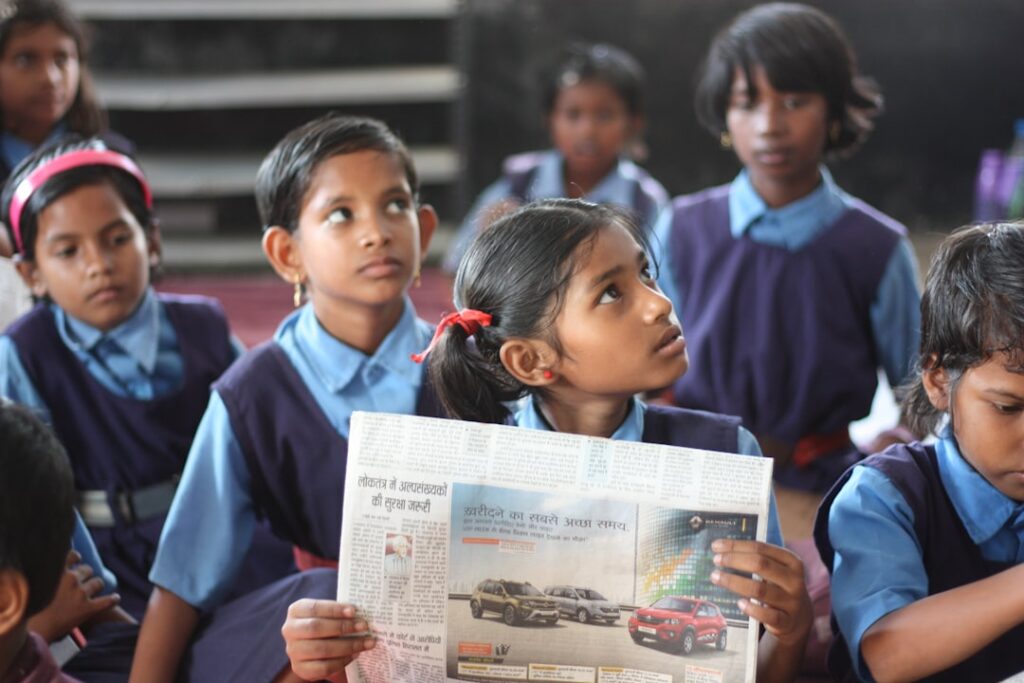
News