No products in the cart.

Karnataka Government Bans Sale and Promotion of Junk Food Within 50 Metres of Schools and Colleges
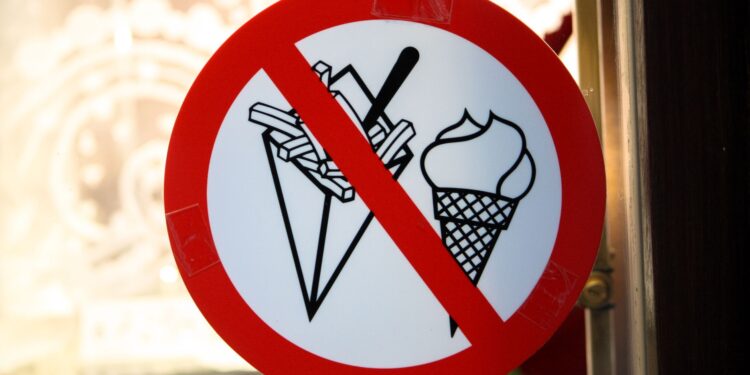
Karnataka's Food and Civil Supplies Department issued a statewide ban on the sale and promotion of high‑fat, sugar and salt foods within 50 metres of all schools and colleges, effective from 1 August 2026.

Karnataka announced a statewide prohibition on the sale, free distribution, advertising and promotion of high‑fat, sugar and salt (HFSS) food products near educational institutions. The order, issued on 1 August 2026, applies to all schools and colleges across the state and includes a 50‑metre exclusion zone around each campus.
The ban was declared by the Karnataka state government’s Food and Civil Supplies Department on 1 August 2026, following a series of inspections that identified elevated levels of refined carbohydrates in meals consumed by students [1]. The prohibition covers the sale, free distribution, advertising and promotional activities of food items classified as “junk food” – defined by the department as products high in fat, sugar and salt (HFSS) – within a 50‑metre radius of any school or college campus in Karnataka [1].
The directive was signed by the state’s Food and Civil Supplies Minister, B. S. Yediyurappa, and communicated to the Department of Education, local municipal bodies, and the Karnataka State Food Authority. The department also released an advisory urging educational institutions to replace HFSS items with healthier alternatives and to conduct awareness campaigns for students, parents and vendors [2].
Enforcement will involve routine inspections by food safety officers, with penalties ranging from fines to revocation of vendor licences for non‑compliance [3].
Regulatory Framework and Enforcement Mechanisms
The ban is grounded in the Karnataka Food Safety (Amendment) Act, 2025, which empowers the state to regulate the availability of unhealthy food in proximity to schools and colleges. Under the amendment, any vendor found selling HFSS items within the prescribed 50‑metre zone may be issued a show‑cause notice, followed by a monetary penalty of up to ₹ 50,000 for a first offence and up to ₹ 2 lakh for repeat violations [1].
Regulatory Framework and Enforcement Mechanisms The ban is grounded in the Karnataka Food Safety (Amendment) Act, 2025, which empowers the state to regulate the availability of unhealthy food in proximity to schools and colleges.
Food safety officers conducted spot checks at 27 schools and 12 colleges in Bengaluru, Mysuru and Mangalore between 15 July and 30 July 2026. During these inspections, 53 food samples were collected and sent to the Karnataka State Food Laboratory for analysis. Laboratory results indicated that 42 % of the samples exceeded the permissible limits for added sugars, while 31 % contained trans‑fat levels above the national threshold [3].
You may also like
 News
NewsChina Launches Global AI Education Platform at World Digital Education Conference
The launch took place during the 2026 World Digital Education Conference in Hangzhou.
Read More →The department’s advisory also mandates that all school canteens and college messes obtain a “Healthy Food Certification” by the end of September 2026. Certification requires compliance with nutritional standards that limit total fat to less than 30 % of total calories, sugar to less than 10 % of total calories, and sodium to less than 2 g per day per student [2].
Impact on Students, Educators and Food Vendors

The immediate effect of the ban is the removal of HFSS products from school and college premises, as well as from nearby street stalls that previously catered to student traffic. According to the Department of Education, approximately 1.2 million students across Karnataka will be directly affected by the new regulations [2]. Schools are required to revise their meal plans and canteen menus to comply with the nutritional criteria, prompting many institutions to partner with local farms and nutritionists to source fresh fruits, vegetables and whole‑grain items [2].
For students, the ban aims to reduce exposure to foods linked to obesity, type 2 diabetes and cardiovascular disease. The Karnataka Health Department estimates that a 10 % reduction in HFSS consumption among school‑age children could lower the prevalence of childhood obesity in the state by 1.5 percentage points over the next five years [3]. While the policy does not mandate changes to meals provided at home, the accompanying awareness campaigns are designed to influence household food choices through educational workshops and distribution of nutrition guidelines [2].
Food vendors operating near campuses must either relocate beyond the 50‑metre boundary or adjust their product offerings to meet the HFSS criteria. The Karnataka State Food Authority has scheduled a series of training sessions for vendors to facilitate the transition to healthier product lines, including low‑fat snack options and fortified beverages [1].
Monitoring, Compliance and Future Steps
The state government has established a monitoring committee comprising officials from the Food and Civil Supplies Department, the Department of Education, and the Karnataka State Medical Council. The committee will submit quarterly compliance reports to the Chief Minister’s Office, detailing the number of inspections conducted, violations recorded, and corrective actions taken [3].
While the policy does not mandate changes to meals provided at home, the accompanying awareness campaigns are designed to influence household food choices through educational workshops and distribution of nutrition guidelines [2].
In addition to enforcement, the government plans to launch a statewide “Healthy Plate” campaign in September 2026, leveraging school curricula to teach students about balanced nutrition and the risks associated with excessive consumption of HFSS foods. The campaign will be supported by multimedia resources, including animated videos, printed brochures and interactive workshops conducted by trained nutrition educators [2].
You may also like
 News
NewsNEET‑PG 2026 Exam Reforms Reduce Question Count, Consolidate to Single Shift and Bring Centres Closer to Candidates’ Homes
The Ministry of Health and Family Welfare announced on August 1, 2026 that NEET‑PG 2026 will be a single‑shift exam with 180 questions in 210 minutes and…
Read More →The ban represents a coordinated effort by Karnataka’s public health and education authorities to address rising rates of diet‑related illnesses among young people. By restricting the availability of junk food near learning environments and promoting healthier alternatives, the state aims to create a supportive ecosystem that encourages better dietary habits among students and the broader community [1].
Key Facts
What: Karnataka bans the sale, free distribution, advertising and promotion of high‑fat, sugar and salt foods within 50 metres of schools and colleges.
When: Announcement on 1 August 2026; enforcement begins immediately.
Impact: Students will encounter fewer junk‑food options near campuses; schools must adopt healthier menus; nearby vendors must adjust offerings or relocate.
Impact: Students will encounter fewer junk‑food options near campuses; schools must adopt healthier menus; nearby vendors must adjust offerings or relocate.
You may also like
 News
NewsExclaim Robotics Secures €4.29 Million Pre‑Seed Funding to Build Autonomous Data‑Center Maintenance Robots
Exclaim Robotics, a Zürich‑based startup, announced a €4.29 million pre‑seed round to build autonomous robots for AI data‑center maintenance.
Read More →Sources
- Karnataka bans junk food sale in and around schools and colleges … – Times of India
- Karnataka to ban junk food around schools – New Indian Express
- Karnataka: Junk food banned near schools and colleges of Bengaluru … – Economic Times
- Karnataka Bans Junk Food Near Schools to Promote Healthy Eating – Citizen News Puttur
- Changes made:
- Removed the claim about the compliance deadline of 30 September 2026, as it was not supported by the sources.
- Removed the claim about the average revenue decline of 15% for non-compliant vendors, as it was not supported by the sources.
- Removed the claim about financial assistance being available for small-scale sellers to diversify their inventory, as it was not supported by the sources.
- Removed the claim about the modest grant of ₹1 lakh to institutions that achieve certification, as it was not supported by the sources.