More than 72 lakh first-time employees have entered the formal workforce under the government’s flagship employment-linked incentive scheme. Joining the scheme and receiving the full benefit are different steps. Here is what first-time workers need to know.
If you started your first formal job after 1 August 2025 and meet the scheme’s eligibility conditions, you could receive up to ₹15,000 from the government.
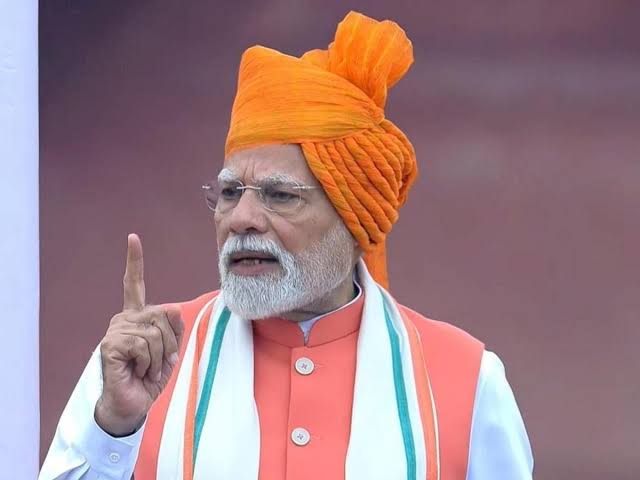
That payment sits at the centre of the Pradhan Mantri Viksit Bharat Rozgar Yojana, announced by Prime Minister Narendra Modi from the Red Fort on Independence Day 2025. The Press Information Bureau describes it as the government’s flagship employment-linked incentive scheme. It is among the few central programmes that puts money directly into an individual’s bank account rather than through an institution.
One year in, the scale is substantial. The PIB’s review of 1 August 2026 records more than 72 lakh first-time employees entering the formal workforce, women at nearly 30% of beneficiaries, and more than 15 lakh beneficiaries who have received incentives under the scheme.
PM-VBRY In 60 Seconds
- Who: First-time EPF contributors joining between 1 August 2025 and 31 July 2027
- Salary ceiling: Gross monthly wage up to ₹1 lakh
- Total benefit: Up to ₹15,000, paid as two instalments of up to ₹7,500 each
- First payment: After six months’ continuous service
- Second payment: After twelve months, plus a financial literacy programme
- Employer benefit: ₹1,000 to ₹3,000 per additional employee per month
- Scheme period: 1 August 2025 to 31 July 2027
Who Gets The ₹15,000
Three conditions decide eligibility. You must have joined an establishment between 1 August 2025 and 31 July 2027. You must not have contributed to the EPF with EPFO or an exempted trust before August 2025, meaning this is genuinely your first formal job. And your gross monthly wage, inclusive of all emoluments, must be ₹1 lakh or less.
Payment is not automatic on joining. The first instalment requires six continuous months with the same employer. If you leave and rejoin elsewhere, the second instalment is forfeited.
How The Two Payments Work The employee benefit equals one month’s EPF wage, capped at ₹15,000, split into two instalments of up to ₹7,500 each.
How The Two Payments Work
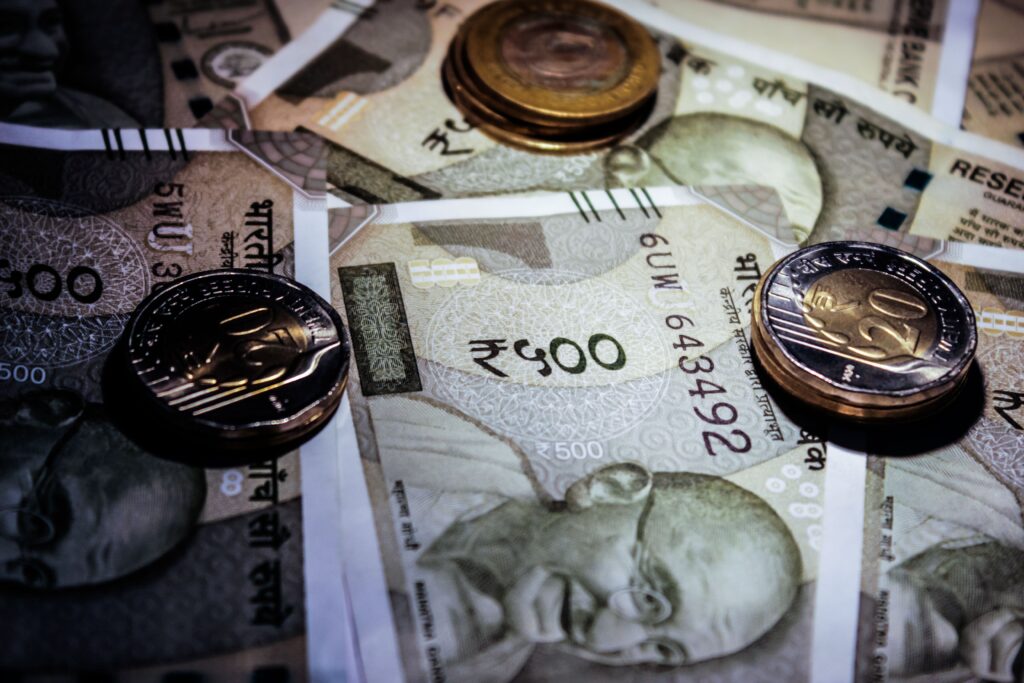
The employee benefit equals one month’s EPF wage, capped at ₹15,000, split into two instalments of up to ₹7,500 each. The first is half of your average EPF wage over six continuous months, released after six months into your Aadhaar-seeded bank account. The second follows at twelve months, provided you complete a free financial literacy programme. A portion of the incentive is held in a savings instrument and can be withdrawn later. Payments are made by Direct Benefit Transfer.
Employers have their own role. Firms receive up to ₹3,000 per additional employee per month, paid into a PAN-linked account, but only if they hire above their 31 July 2025 baseline: at least two new employees for firms below 50 workers, five for larger ones. They must hold an EPFO code and file monthly returns. Incentives run two years across sectors and extend to years three and four for manufacturing. A worker whose employer has not filed returns will not be paid.
Why 72 Lakh Does Not Mean 72 Lakh Payments
Three figures circulate, and they measure different things.
72 lakh+ first-time employees reported in the government’s one-year review.
₹744.58 crore paid to 13.18 lakh first-time employees under the employee component by July 2026, according to answers tabled in Parliament.
Enrolment counts workers entering the scheme.
More than ₹2,000 crore transferred across both components by 19 June 2026, when Prime Minister Narendra Modi disbursed about ₹2,400 crore at a programme in Vigyan Bhawan.
Enrolment counts workers entering the scheme. Disbursement counts workers who have since met the payment conditions. The two should not be read as competing estimates. A worker hired on day one could not be paid before February 2026, and the employer-side calculation mechanism was issued as a standard operating procedure only in November 2025, so that component also took time to become operational.
The reporting dates differ as well. Business Standard, using data supplied by the labour ministry, reported on 16 August 2026 that 62.56 lakh first-timers had been covered, 32.6% of the 1.92 crore two-year target, alongside 48.5 lakh additional jobs from about 1.86 lakh employers between August 2025 and June 2026. That analysis also noted that because the scheme runs two separate streams, a single worker could potentially be counted under both.
What One Year Cannot Yet Tell Us
Participation is established. Causation is not. The available data cannot show how many of these jobs existed because of the incentive rather than happening anyway, nor whether employment persists after the incentive period ends. No independent evaluation has been published.
Labour economist Santosh Mehrotra has argued that the scheme addresses supply rather than demand. In an interview with The Federal in July 2025, he said firms “won’t expand or hire, no matter the subsidy” without demand growth, and that the 1.92 crore first-timer target “lacks clarity on how this figure was calculated.” Business Standard’s own year-one report similarly found experts flagging weak demand and limited hiring incentives as constraints.
Labour economist Santosh Mehrotra has argued that the scheme addresses supply rather than demand.
I Started My First Job After 1 August 2025. What Should I Check?
- Have you ever contributed to EPF before?
- Is your gross monthly wage within ₹1 lakh?
- Is your employer EPFO-registered and filing monthly returns?
- Has your UAN been generated correctly?
- Is your bank account Aadhaar-seeded?
- Have you completed six months with the same employer?
- Have you completed the financial literacy programme before month twelve?
What Happens Next
The window closes on 31 July 2027. Twelve months remain and about two-thirds of the first-timer target is outstanding. The clearer evidence lies ahead: as workers hired during the first year clear six and twelve months, payment data will show how many complete the full benefit cycle, and employer participation will reveal whether the incentive is being used broadly or concentrated among a narrower group of formal firms.
Data note: figures are drawn from Press Information Bureau releases, parliamentary answers, the official scheme portal and independent reporting available through September 2026. Reporting dates are stated where they differ.
Written by Career Ahead AI. AI can make mistakes, so verify key facts. Report errors to support@careeraheadonline.com.