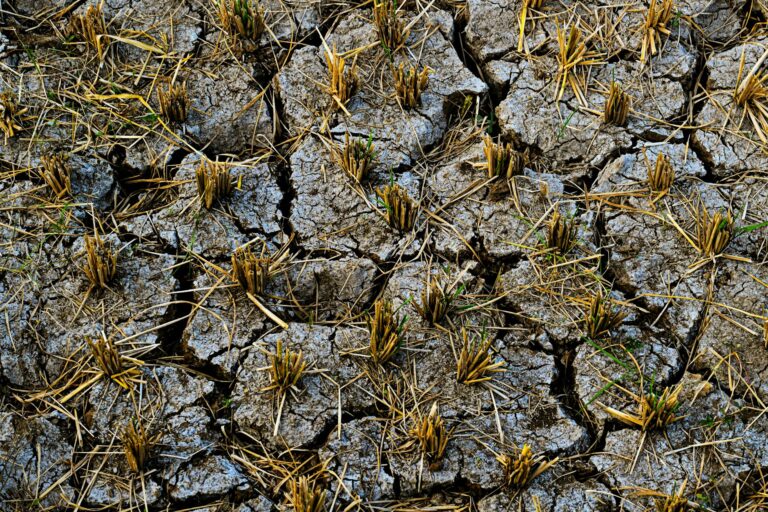
Regenerative farming is moving from pilot projects to institutional policy, offering a systemic lever for climate mitigation, productivity gains, and new pathways of economic mobility.
In developing economies, the shift promises asymmetric benefits for smallholders, agribusiness leaders, and capital markets alike.
Global Food System at a Crossroads
The United Nations projects that feeding an estimated 10 billion people by 2050 will require a 50 percent increase in aggregate food production, even as climate‑driven yield gaps threaten to erode gains made over the past two decades [1]. Simultaneously, the World Bank estimates that 30 percent of the world’s arable land is already degraded, with the majority of this loss concentrated in low‑income regions where agriculture accounts for over 60 percent of GDP [2].
These macro‑trends expose a structural paradox: the very regions that must expand output are the ones most exposed to climate volatility, soil erosion, and limited access to capital. Traditional input‑intensive intensification has delivered short‑term yield spikes but has also deepened dependency on synthetic fertilizers, amplified greenhouse‑gas (GHG) emissions, and entrenched inequitable land tenure systems.
Regenerative agriculture (RA) presents a countervailing trajectory. By re‑embedding carbon, water, and biodiversity cycles into the production base, RA aligns climate mitigation with productivity. The International Fund for Agricultural Development (IFAD) notes that 80 percent of the world’s extreme poor reside in rural areas and rely on agriculture for livelihoods, making the sector a decisive lever for economic mobility [3]. Institutional momentum—evident in the FAO’s “Regenerative Agriculture Framework” and the European Union’s “Farm to Fork” strategy—signals that the practice is transitioning from niche to policy mainstream.
Regenerative Agriculture’s Core Mechanisms
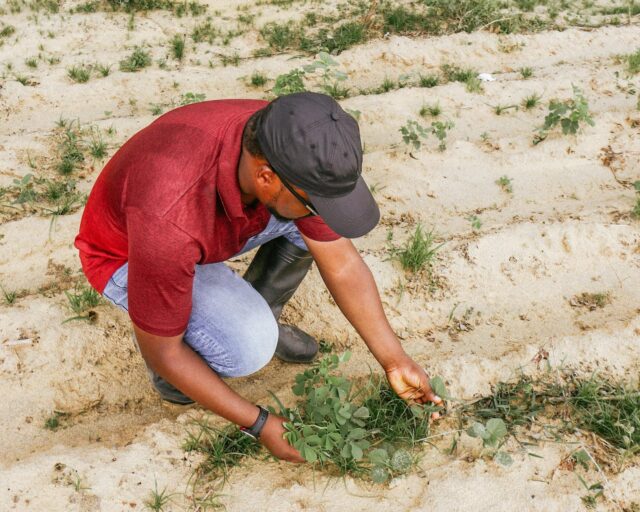
RA rests on three interlocking biophysical pillars: (1) soil carbon sequestration through cover cropping and reduced tillage, (2) diversified plantings that enhance biodiversity and pest regulation, and (3) integrated agroforestry that couples woody perennials with annual crops. A meta‑analysis of 215 field trials published in Sustainability found that systems employing these pillars achieved an average 0.4 t C ha⁻¹ yr⁻¹ increase in soil organic carbon, alongside a 12 percent rise in water‑use efficiency [4].
The International Fund for Agricultural Development (IFAD) notes that 80 percent of the world’s extreme poor reside in rural areas and rely on agriculture for livelihoods, making the sector a decisive lever for economic mobility [3].
The Agricultural and Rural Management Training Institute’s longitudinal study in Kenya’s Rift Valley corroborates these biophysical gains: farms that shifted 30 percent of cropland to cover crops reduced synthetic nitrogen use by 28 percent while maintaining yield parity on maize and sorghum [5]. Moreover, a FAO technical note on agroforestry reported that integrating nitrogen‑fixing trees raised average smallholder cereal yields by 15 percent within five years, without additional irrigation [6].
These mechanisms generate a structural feedback loop: healthier soils retain more moisture, reducing vulnerability to drought; increased organic matter improves nutrient cycling, lowering dependence on purchased inputs; and diversified canopies buffer temperature extremes, expanding the viable cropping envelope. The loop is not merely agronomic; it reshapes the institutional calculus of risk, credit, and market access.
Systemic Ripple Effects Across Rural Economies
When RA alters the biophysical foundation, a cascade of systemic outcomes follows.
- Market Realignment – The rise of carbon‑credit schemes linked to verified soil sequestration creates a new revenue stream for smallholders. In Brazil’s Mato Grosso, a pilot program enabled 12 percent of participating farms to monetize an average of $45 ha⁻¹ per year in carbon offsets, a figure that outpaces typical fertilizer subsidies [7]. This asymmetric income source incentivizes adoption beyond climate‑motivated altruism.
- Supply‑Chain Reconfiguration – Retailers increasingly demand provenance‑verified regenerative inputs, prompting the emergence of “regenerative hubs” that aggregate produce, certify soil health metrics, and negotiate premium prices. The World Bank’s “Rural Value Chain Initiative” documents a 22 percent price premium for certified regenerative cocoa in Côte d’Ivoire, translating into higher farm‑gate earnings and reduced post‑harvest loss due to improved soil moisture retention [8].
- Labor Market Transformation – RA’s emphasis on ecological monitoring and diversified cropping expands demand for agronomists, soil scientists, and extension officers skilled in data‑driven stewardship. The International Labour Organization estimates that, by 2030, regenerative‑focused roles could constitute 8 percent of agricultural employment in Sub‑Saharan Africa, up from 2 percent in 2022, representing a structural shift in rural career pathways [9].
- Public‑Health Externalities – Reduced synthetic pesticide use correlates with lower incidences of pesticide‑related illness. A WHO review linked a 15 percent decline in pesticide exposure among RA adopters in India to a measurable drop in acute respiratory cases, underscoring the cross‑sectoral health dividend of soil‑centric practices [10].
Collectively, these ripples rewire the institutional architecture of agriculture: financing institutions recalibrate risk models to incorporate ecosystem services, governments embed RA metrics into national climate pledges, and private capital flows toward impact‑linked agrifinance vehicles.
Human Capital and Career Trajectories
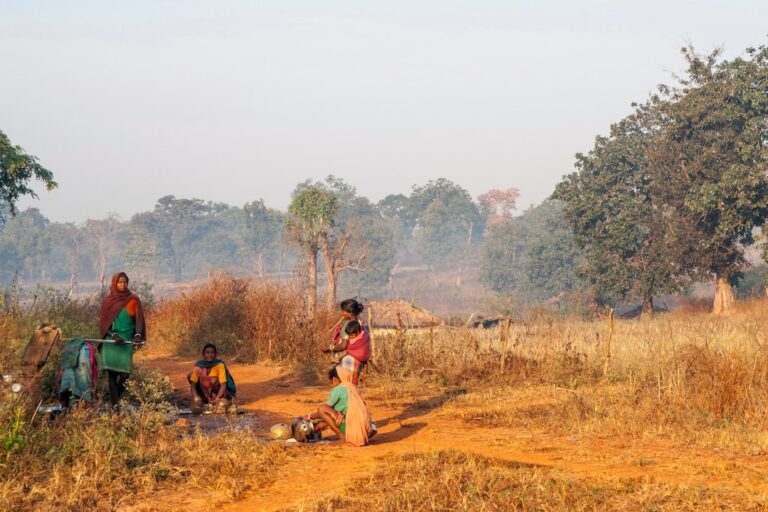
The structural shift in production methods translates into a reallocation of career capital.
- Skill Revaluation – Traditional “farm manager” competencies—focused on input logistics—are being supplanted by expertise in regenerative design, carbon accounting, and digital soil sensing. Training programs led by the National Association of Agricultural Educators now embed modules on “soil health analytics” and “agroforestry business models,” reflecting a curriculum pivot that aligns with emerging labor market demands [11].
- Entrepreneurial Pathways – Smallholder cooperatives are leveraging RA to launch ancillary services, such as community‑owned carbon credit platforms and on‑farm processing of high‑value niche crops (e.g., medicinal herbs cultivated under shade trees). These ventures generate upward mobility channels that were previously inaccessible in mono‑crop economies.
- Leadership Reconfiguration – Institutional power is diffusing from large agribusinesses toward farmer‑led networks that command data on soil carbon, biodiversity indices, and market certifications. In Ethiopia’s “Green Belt” project, farmer committees now sit on regional agricultural boards, influencing policy on input subsidies and land‑use zoning—a clear redistribution of governance authority [12].
- Capital Access – Impact investors are increasingly using regenerative performance metrics as covenants in loan agreements. A 2025 pilot by the International Finance Corporation (IFC) tied 30 percent of loan disbursement to verified increases in soil organic carbon, effectively aligning financial incentives with ecological outcomes and lowering borrowing costs for compliant farms by 1.5 percentage points on average [13].
These dynamics suggest that the adoption of RA is not a peripheral sustainability add‑on; it is a structural catalyst for career capital formation, redefining who commands expertise, who accesses capital, and how leadership is exercised within rural economies.
Labor Market Transformation – RA’s emphasis on ecological monitoring and diversified cropping expands demand for agronomists, soil scientists, and extension officers skilled in data‑driven stewardship.
Projection to 2029–2031
Looking ahead, three interlocking trajectories will shape the RA landscape in developing countries over the next three to five years.
- Policy Consolidation – By 2029, at least 15 percent of low‑income nations are expected to embed RA standards into national climate‑adaptation plans, following the precedent set by Kenya’s 2024 “Soil Health Act.” This institutionalization will standardize measurement protocols, lower transaction costs for carbon markets, and create a predictable regulatory environment for investors.
- Technology Diffusion – Low‑cost remote sensing platforms (e.g., satellite‑derived NDVI indices) are projected to achieve 70 percent coverage of smallholder plots in East Africa by 2030, enabling real‑time verification of regenerative outcomes and unlocking faster financing cycles.
- Capital Scaling – Impact‑linked debt instruments tied to regenerative performance are likely to surpass $12 billion in cumulative issuance across the Global South by 2031, a threefold increase from 2025 levels. This capital surge will accelerate adoption, but will also intensify competition for skilled agronomists and data analysts, reinforcing the importance of career capital in the sector.
The structural shift toward regenerative agriculture thus appears poised to reconfigure food security, climate mitigation, and rural livelihoods in a mutually reinforcing loop. The magnitude of the impact will depend on the alignment of institutional incentives, the scalability of technology, and the capacity of the workforce to acquire the requisite regenerative skill set.
Key Structural Insights
[Insight 1]: Regenerative agriculture creates a feedback loop where biophysical improvements lower input costs, generate carbon‑credit revenues, and enhance climate resilience, fundamentally reshaping the risk calculus for lenders and insurers.
[Insight 2]: The diffusion of RA reassigns institutional power from large agribusinesses to farmer‑led networks, embedding new governance structures that prioritize ecosystem services alongside commodity yields.
- [Insight 3]: Career capital in the Global South is being revalued toward regenerative expertise, making agronomic data analytics and carbon accounting the new currency of rural economic mobility.
Written by Career Ahead AI. AI can make mistakes, so verify key facts. Report errors to support@careeraheadonline.com.