No products in the cart.

Revolutionizing Mental Health: Advances in Science and AI

Innovations in brain imaging and AI are reshaping mental health care, offering new hope for effective treatments.

Boston, USA — mental health science is undergoing a seismic shift. Recent breakthroughs in brain imaging and artificial intelligence (AI) are poised to revolutionize the diagnosis and treatment of mental health disorders. These advancements promise not only improved patient outcomes but also a more nuanced understanding of the brain’s complexities.
Why does this matter now? The World Health Organization (WHO) reported that mental health disorders affect 1 in 5 people globally, with depression alone projected to be the leading cause of disability by 2030[1]. As the demand for effective mental health solutions grows, integrating cutting-edge technology into treatment paradigms becomes crucial.

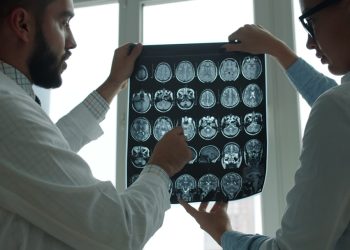
Recent developments in brain imaging technologies, such as functional MRI (fMRI) and positron emission tomography (PET), have allowed researchers to visualize and understand brain activity in unprecedented detail. These imaging techniques enable clinicians to identify abnormalities that may correlate with specific mental health conditions. For instance, studies have shown that particular patterns of brain activity can be linked to anxiety disorders, allowing for more tailored treatment approaches[2].
Moreover, AI diagnostics are gaining traction as a powerful tool in mental health assessments. Algorithms trained on vast datasets can analyze speech patterns, facial expressions, and even social media activity to provide insights into a person’s mental state. A notable example is Woebot, an AI-driven chatbot that uses cognitive-behavioral techniques to support individuals struggling with depression and anxiety. The efficacy of such tools is underscored by a study published in the Journal of Medical Internet Research, which found that users reported significant reductions in depressive symptoms after engaging with the chatbot[3].
Recent developments in brain imaging technologies, such as functional MRI (fMRI) and positron emission tomography (PET), have allowed researchers to visualize and understand brain activity in unprecedented detail.
In the context of mental health treatment, the implications of these technologies are profound. Personalized medicine, a concept that tailors treatments based on individual characteristics, is becoming increasingly applicable in psychiatry. Dr. John Torous, director of the digital psychiatry division at Beth Israel Deaconess Medical Center, emphasizes that integrating AI and brain imaging can lead to more accurate diagnoses and effective treatment plans. “We are moving towards understanding mental health not just through symptoms, but through the biological underpinnings of these conditions,” he states.
You may also like
 News
NewsU.S. Stocks Climb as Weak Jobs Data Lowers Rate Hike Expectations
U.S. stocks rose following a weak jobs report that tempered expectations for Federal Reserve interest rate hikes. This shift in market sentiment is crucial for…
Read More →However, the integration of these technologies is not without challenges. Ethical considerations around data privacy, consent, and the potential for bias in AI algorithms loom large. The American Psychological Association has raised concerns about ensuring that AI tools are developed and deployed equitably, particularly for marginalized populations who may already face barriers to accessing mental health care[4].
As we look to the future, the intersection of mental health science and technology holds immense potential. The advent of teletherapy and remote monitoring tools has already expanded access to care, particularly in underserved areas. By leveraging AI and advanced imaging, mental health professionals can enhance their understanding of disorders and develop innovative therapies that are more effective and personalized.
Moreover, as these technologies continue to evolve, we may see the emergence of predictive analytics in mental health—using data to anticipate crises before they occur. Such proactive measures could significantly reduce the burden of mental health disorders on individuals and healthcare systems alike.
Ultimately, the future of mental health science is not solely about technological advancements. It’s about creating a holistic approach that includes the voices of patients, practitioners, and researchers. With continued investment in research and development, combined with a commitment to ethical practices, the next decade could redefine how we approach mental health care.
By leveraging AI and advanced imaging, mental health professionals can enhance their understanding of disorders and develop innovative therapies that are more effective and personalized.
The promise of AI and advanced brain imaging technology is just beginning to unfold. As society embraces these innovations, we must remain vigilant about their implications and strive to make mental health care more accessible, effective, and compassionate. How will we harness these tools to create a better future for mental health?
You may also like
 News
NewsAnup Bagchi Takes Charge as HDFC Bank MD & CEO
Anup Bagchi, with over three decades in financial services, is set to lead HDFC Bank starting October 27, 2026, following the retirement of Sashidhar Jagdishan.
Read More →