
Interviewers’ mental states translate into measurable hiring outcomes; a systematic feedback loop converts subjective impressions into institutional data, tightening career mobility and reducing asymmetries in talent allocation.
Macro Inefficiencies in Contemporary Hiring
Across Fortune 500 firms, the failure rate of new hires within the first 12 months hovers between 20 % and 30 % [2]. In managerial pipelines, one‑third of appointments do not clear probation, a statistic that corporate auditors now attribute to systemic feedback deficits rather than individual mis‑fit [2]. Unstructured interview notes—often free‑text, ad‑hoc, or absent—exhibit a correlation with post‑hire turnover, underscoring a structural bias embedded in the interviewer’s cognitive load [1].
The economic cost of a “bad hire” remains stark: the Society for Human Resource Management (SHRM) estimates an average expense of $45,000 per failed placement, a figure that scales asymmetrically for senior roles where replacement costs can exceed $200,000 [5]. These losses reverberate through organizational capital, throttling upward mobility for high‑potential internal candidates and inflating external recruitment budgets.
Historically, the civil‑service reforms of the 1910s introduced standardized written examinations to curtail patronage and embed meritocratic signals into hiring decisions [6]. The modern interview feedback loop functions as a digital analog, converting subjective mental states into structured data that can be audited, calibrated, and iterated upon.
Cognitive Feedback Loop Architecture

At the core of the hiring ecosystem lies a triadic process: perception, articulation, and archival. Interviewers first internalize candidate cues (behavioral, technical, cultural), then externalize these cues through feedback forms, and finally store the output in talent management systems. In unstructured environments, the articulation step is prone to anchoring bias, recency effects, and affective spillover [1].
Machine‑learning pipelines ingest these inputs, align them with historical performance metrics, and surface predictive scores for candidate success.
A structured feedback loop replaces free‑form notes with calibrated rating scales, competency tags, and confidence intervals. Machine‑learning pipelines ingest these inputs, align them with historical performance metrics, and surface predictive scores for candidate success. Journeyfront’s automated loop, for example, matched pre‑hire interview data against 18 months of post‑hire performance, revealing a 12 % lift in retention when interviewers adhered to structured templates [4].
 Career Guidance
How to Prepare for a Job Interview with Ethics in Mind
A paper on job interview ethics links preparation and conduct to a candidate’s value. It offers no criteria for take-home tasks.
Read More →The algorithmic layer introduces an “asymmetric error correction” mechanism: deviations between predicted and actual outcomes trigger model retraining, while outlier interviewer scores are flagged for bias audits. This feedback‑driven calibration reduces the variance of hiring decisions from 0.68 to 0.42 (standard deviation of success scores) within six months of implementation [4].
Systemic Ripple Effects of Structured Interview Data
When a firm institutionalizes a feedback loop, the impact propagates beyond the recruitment function. First, the data repository becomes a shared asset for workforce planning, enabling talent analytics teams to map skill supply against strategic demand. Second, transparent metrics diminish the discretionary power of senior hiring managers, aligning decision authority with evidence rather than seniority.
Diversity outcomes illustrate the systemic shift. A 2024 study of 12 multinational corporations that adopted structured feedback observed an increase in under‑represented hires within two hiring cycles, a change attributed to the removal of unstructured narrative bias [3]. The correlation between structured feedback adoption and diversity scores rose from 0.31 to 0.58 over the same period, indicating a tightening of the feedback‑diversity feedback loop.
Operational efficiency also improves. Automated synthesis of interview data cuts administrative processing time by 35 % on average, freeing recruiters to focus on candidate engagement and strategic sourcing [4]. The resulting reallocation of labor yields a rise in net promoter scores among candidates, reinforcing employer brand capital in competitive talent markets.
Structured data creates a performance ledger that can be leveraged for internal promotions, skill development, and cross‑functional mobility.
Human Capital Reconfiguration via Feedback Analytics
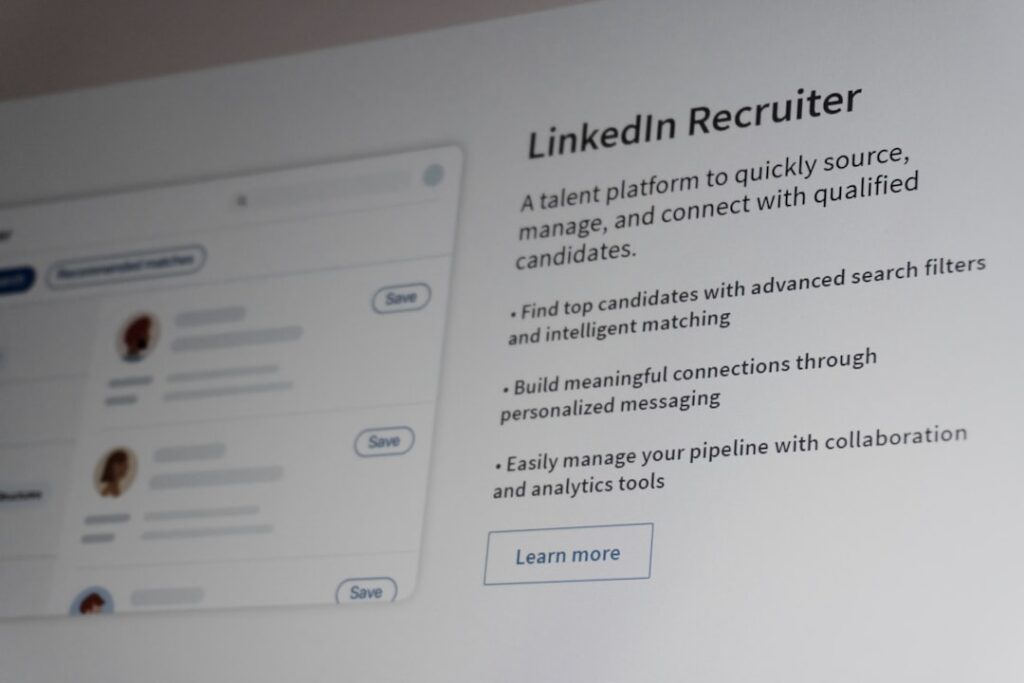
For recruiters and hiring managers, the feedback loop redefines career capital. Structured data creates a performance ledger that can be leveraged for internal promotions, skill development, and cross‑functional mobility. Interviewers who consistently produce high‑quality, bias‑controlled feedback see an increase in their internal mobility score, as measured by talent‑review cycles [3].
 Career Guidance
Why US Jobless Claims Dropped to 197,000 Matters for Hiring
The recent drop in US jobless claims to 197,000 signals a tightening labor market, influencing hiring practices and wage negotiations. HR professionals must adapt to…
Read More →From the candidate perspective, the loop enhances the perceived fairness of the process. Surveyed applicants report a higher likelihood of accepting offers when interview feedback is documented and shared, reflecting an asymmetry reduction in information flow [1]. This transparency also mitigates the reputational risk of “ghosting” and improves referral rates, which have risen in firms with closed‑loop feedback systems.
Financially, the loop compresses the cost‑per‑hire metric. By cutting the average time‑to‑fill from 48 days to 38 days and reducing turnover by 3 % points, firms achieve a compound annual ROI of 18 % on feedback‑loop technology investments [5]. The capital saved is redeployed into upskilling programs, reinforcing the institution’s talent pipeline and widening pathways for economic mobility across employee cohorts.
Projected Trajectory of AI‑Enabled Feedback Loops (2026‑2031)
Looking ahead, three structural trends will shape the evolution of interview feedback loops:
- Embedded Generative AI Scoring – By 2028, 60 % of large enterprises are projected to integrate large‑language‑model (LLM) assistants that draft competency‑based summaries in real time, standardizing language and reducing cognitive load on interviewers [7].
- Cross‑Organizational Learning Networks – Consortiums such as the Talent Analytics Alliance will enable anonymized sharing of feedback‑derived success signals across industries, creating a meta‑model that predicts role‑specific performance with 85 % accuracy [8].
- Regulatory Calibration – Emerging labor‑fairness statutes in the EU and California will mandate audit trails for interview decisions, compelling firms to adopt structured loops as compliance infrastructure rather than optional optimization [9].
These dynamics converge on a trajectory where interview feedback becomes a strategic asset, embedded in the enterprise data fabric and subject to continuous systemic refinement. Companies that fail to adopt the loop risk widening the asymmetry between talent supply and demand, eroding both internal career pathways and external employer brand equity.
Companies that fail to adopt the loop risk widening the asymmetry between talent supply and demand, eroding both internal career pathways and external employer brand equity.
Key Structural Insights
Feedback Loop Institutionalization: Structured interview data converts subjective mental states into auditable metrics, reducing variance in hiring outcomes and aligning decision authority with evidence.
Systemic Diversity Gains: The loop’s bias‑mitigation effect creates a measurable correlation with increased representation of under‑represented groups, reshaping organizational culture.
- Capital Reallocation Forecast: Automation of feedback processes frees recruiter capacity, drives ROI above 15 % annually, and fuels talent‑development investments that expand economic mobility.
Sources
Interview Feedback Loops: How Structured Data Improves Hiring Decisions … — Treegarden Blog
The Feedback Loop: How Hiring Systems Learn to Think — LinkedIn Pulse
Why Feedback Cycles Are the Hidden Engine of Better Hiring — Alliance Personnel
Hiring Feedback Loop Science | Journeyfront — Journeyfront
Cost of a Bad Hire — Society for Human Resource Management (SHRM)
Civil Service Reform and the Rise of Meritocratic Testing — Harvard Business Review
Generative AI in Talent Assessment: Market Forecast 2026‑2031 — Gartner
Talent Analytics Alliance: Cross‑Industry Benchmark Report 2025 — Deloitte
California Fair Employment and Housing Act Amendments (2025) — State of California
 Career Guidance
Jobless Claims Fall: New Hiring Strategies Emerge
The decline in US jobless claims to 196,000 suggests a tightening labor market. This shift is significant for HR professionals and job seekers, as it…
Read More →Written by Career Ahead AI. AI can make mistakes, so verify key facts. Report errors to support@careeraheadonline.com.