Vertical farming is redefining urban food production by turning fixed‑capital investment and renewable energy access into the primary determinants of economic viability, while simultaneously forging new career pathways and institutional power structures within cities.
Dek: The vertical farming sector is moving from niche experimentation to a multi‑billion‑dollar industry, driven by climate‑induced resource constraints and dense urban demographics. Its rise reconfigures agricultural labor markets, redirects institutional investment, and creates new pathways for economic mobility in metropolitan centers.
Contextualizing Urban Agriculture in a Demographic and Climate Regime
By 2050 the world will house 9.7 billion people, a figure that strains the 4.9 billion hectares of arable land currently in production and intensifies pressure on water supplies already stressed by a 20 % decline in per‑capita freshwater availability in many megacities [1]. Simultaneously, urbanization is projected to concentrate 68 % of the global population in cities, compressing food distribution networks and amplifying the carbon footprint of long‑haul logistics [2].
These macro‑trends constitute a structural shift in the agriculture‑food nexus: traditional, land‑intensive models are increasingly misaligned with the spatial and environmental realities of the coming decades. Vertical farming—defined as the indoor, multilayer cultivation of crops using soilless media and controlled‑environment agriculture (CEA)—offers a systematic response to these constraints. The market, valued at $2.5 billion in 2020, is projected to reach $13.1 billion by 2026, reflecting a compound annual growth rate of 25.2 % [3]. This trajectory signals not merely a product innovation but an institutional reallocation of capital toward urban agritech ecosystems.
Core Mechanisms: Technology, Resource Efficiency, and Scale
Vertical Farms Reshape Urban Food Systems: A Structural Analysis of Economic Viability and Career Capital
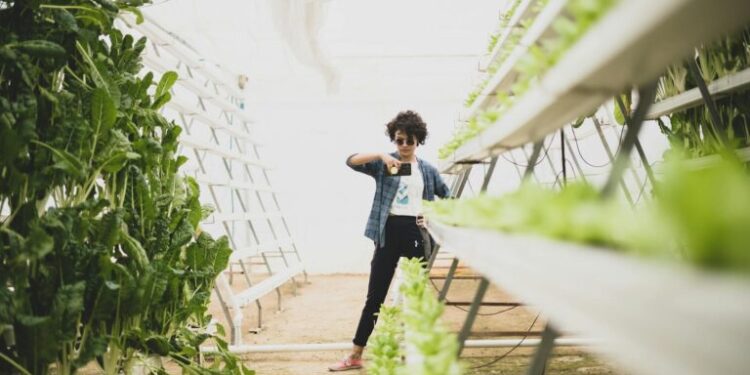
Vertical farms replace the stochastic variables of field agriculture—soil heterogeneity, weather, pests—with engineered parameters: LED spectra, nutrient‑film solutions, and climate‑controlled chambers. Empirical studies show water use reductions of up to 90 % relative to conventional field irrigation because recirculating hydroponic loops capture transpiration losses [1]. Yield per square meter for leafy greens can exceed 10 kg m⁻² year⁻¹, a tenfold increase over field averages [4].
The technology stack integrates Internet‑of‑Things (IoT) sensors, machine‑learning growth models, and robotic harvesting. For instance, AeroFarms’ “Aeroponic Cloud” system employs high‑resolution imaging to adjust nutrient misting in real time, cutting labor inputs by 30 % and delivering a 3‑year payback on capital expenditures (CAPEX) of $30 million for a 2‑hectare facility [5]. LED efficiency improvements—now exceeding 2.5 µmol J⁻¹—lower electricity intensity to 0.5 kWh kg⁻¹ for lettuce, a figure comparable to regional grid averages in the Midwest United States [6].
The technology stack integrates Internet‑of‑Things (IoT) sensors, machine‑learning growth models, and robotic harvesting.
These efficiencies are not isolated technical gains; they constitute a systemic rebalancing of input‑output ratios that redefines the cost structure of food production. Fixed costs (facility construction, lighting rigs) dominate upfront, while variable costs (energy, nutrients) become the primary levers for operational optimization. This inversion reshapes risk profiles for investors, privileging entities with access to low‑cost, renewable electricity and sophisticated data analytics capabilities.
Recent cybersecurity evaluations reveal significant legal gaps in India regarding liability for autonomous AI agents, highlighting the urgent need for regulatory reform.
By locating production within 10 km of consumption points, vertical farms truncate the “food miles” metric, reducing transportation emissions by an estimated 40 % for leafy greens in metropolitan regions [3]. The proximity effect also shortens supply chain lead times from weeks to hours, enhancing resilience against disruptions such as pandemic‑related logistics bottlenecks or climate‑induced crop failures in peripheral regions.
Institutional Power Shifts
Public‑private partnerships are emerging as the governance model for urban agritech. The New York City Economic Development Corporation (NYCEDC) has allocated $150 million in tax‑increment financing to the Brooklyn‑based Bowery Farming, contingent on meeting local hiring quotas and delivering a minimum of 30 % of produce to food‑insecure neighborhoods [7]. Such arrangements embed vertical farms within municipal food‑policy frameworks, granting city administrations a direct stake in agricultural output and a new lever for addressing equity goals.
Innovation Cascades
The demand for high‑efficiency LEDs, precision sensors, and AI‑driven climate controllers fuels adjacent sectors. Companies like Philips Lighting have reported a 22 % revenue uplift in their horticultural lighting division since 2021, directly attributable to vertical farm contracts [8]. Moreover, academic‑industry consortia—exemplified by the Cornell‑University‑based Controlled Environment Agriculture Center—are accelerating the diffusion of genotype‑environment interaction models, lowering entry barriers for smaller entrepreneurs and expanding the talent pipeline.
These systemic dynamics illustrate a feedback loop: vertical farms generate market demand for specialized components; component manufacturers lower unit costs; lower costs expand the feasible scale of farms, reinforcing the initial market expansion.
Vertical farms account for a significant share of this growth, as firms prioritize interdisciplinary teams that blend agronomy with software development.
Human Capital Reconfiguration: Career Paths, Economic Mobility, and Leadership Opportunities
Vertical Farms Reshape Urban Food Systems: A Structural Analysis of Economic Viability and Career Capital
Emerging Occupational Categories
The vertical farming ecosystem creates a suite of new professional roles: CEA systems engineers, data scientists specializing in phenomics, and supply‑chain orchestrators for hyper‑local distribution. According to the U.S. Bureau of Labor Statistics, employment in “Food Science and Technology” occupations is projected to grow 12 % from 2022 to 2032, outpacing the average for all occupations [9]. Vertical farms account for a significant share of this growth, as firms prioritize interdisciplinary teams that blend agronomy with software development.
Australia's Startup Battlefield showcases eight innovative startups vying for investment opportunities in AI, health tech, and workforce management, reflecting a growing tech ecosystem poised for…
Vertical farms are typically situated in underutilized industrial zones or repurposed warehouses, often in proximity to low‑income neighborhoods. The NYCEDC partnership mandates that 40 % of new hires be residents of the boroughs where facilities operate, creating a pipeline for upward mobility that bypasses traditional agricultural labor pathways, which are frequently seasonal and geographically displaced [7]. In Singapore, the government‑sponsored Sky Greens initiative has paired vertical farm apprenticeships with subsidized housing vouchers, linking skill acquisition directly to housing security—a structural lever for reducing intergenerational poverty [10].
Leadership and Institutional Influence
Executive leadership in vertical farming firms increasingly originates from technology sectors rather than conventional agribusiness. This cross‑pollination reorients decision‑making toward data‑centric governance and rapid iteration cycles, akin to Silicon Valley start‑up models. However, the sector also witnesses the rise of hybrid leadership structures: agronomists occupying chief technology officer (CTO) roles to ensure biological fidelity, while chief operating officers (COO) negotiate municipal zoning and utility contracts. The convergence of these skill sets creates a new cadre of “agritech leaders” who wield influence across both private capital markets and public policy arenas.
Skill Capital Accumulation
The demand for advanced technical competencies accelerates credential inflation. Universities such as Wageningen University and Cornell have launched dedicated master’s programs in Controlled Environment Agriculture, with enrollment up 45 % year‑over‑year since 2021 [11]. This institutionalization of CEA education translates into a measurable increase in career capital for graduates, who command salaries 30 % higher than traditional horticulture counterparts, according to industry salary surveys [12].
Outlook: Structural Trajectory Through 2029
The next five years will likely witness three converging developments that cement vertical farming’s systemic role:
> * [Insight 3]: The sector’s growth spawns a distinct agritech leadership class whose hybrid expertise reshapes both private capital allocation and public regulatory agendas, accelerating systemic realignment of urban food systems.
Energy Integration: Municipalities are piloting renewable micro‑grids paired with vertical farms to mitigate the sector’s electricity intensity. New York’s “Green Roofs and Farms” initiative targets a 50 % renewable share of farm power by 2029, which would reduce operational OPEX by an estimated $5 million per large‑scale facility [13].
Regulatory Codification: The European Union is drafting a “Controlled Environment Agriculture Directive” that standardizes safety, labeling, and labor standards across member states, effectively lowering compliance costs and enabling cross‑border capital flows [14].
Scale Economies and Consolidation: M&A activity is projected to increase by 18 % annually, with larger agritech conglomerates acquiring niche technology start‑ups to internalize R&D pipelines. This consolidation will concentrate market power, but also generate capital for large‑scale infrastructure projects that can achieve economies of scale comparable to traditional grain silos.
Collectively, these trends suggest that vertical farming will transition from a high‑CAPEX, venture‑backed growth phase to a mature, utility‑like industry by the end of the decade. The institutional power balance will tilt toward urban governance bodies and integrated agritech firms, while the career capital landscape will reward interdisciplinary expertise that bridges biology, data science, and civic negotiation.
The formation of a new AI startup by four top Google researchers, led by Jeff Dean, signifies a pivotal moment in the artificial intelligence landscape,…
Key Structural Insights
> [Insight 1]: Vertical farming inverts the traditional agricultural cost structure, shifting risk toward fixed capital and energy inputs, which reorients investment toward entities with renewable‑energy access and data‑analytics capacity.
> [Insight 2]: Institutional partnerships embed vertical farms within municipal policy frameworks, creating new levers for economic mobility and food‑security outcomes in underserved urban neighborhoods.
> * [Insight 3]: The sector’s growth spawns a distinct agritech leadership class whose hybrid expertise reshapes both private capital allocation and public regulatory agendas, accelerating systemic realignment of urban food systems.




 Government & Policy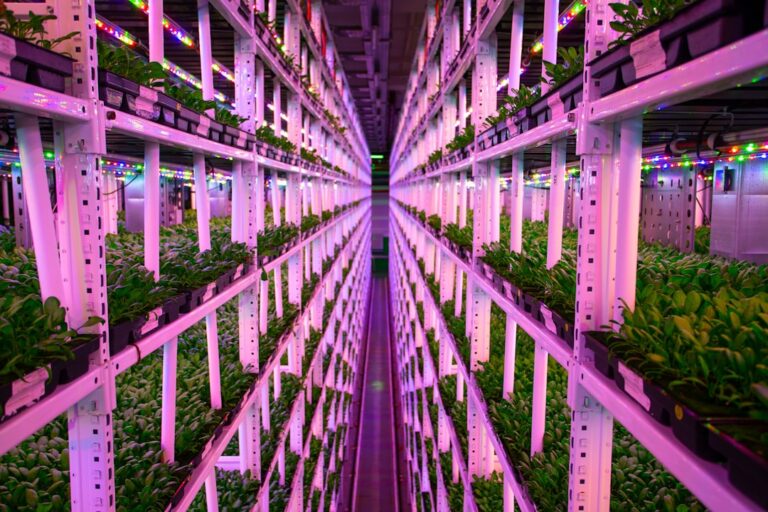
 Entrepreneurship & Business
Entrepreneurship & Business