No products in the cart.

Why code bloat silently inflates your organization’s cyber risk

Code bloat fuels a surge in alerts and critical risks, stretching security teams and inflating costs; the Cybersecurity Complexity Matrix maps this hidden danger.

Bloating code not only slows systems; it multiplies alerts, multiplies critical exposures, and forces security teams into a costly, error-prone treadmill.
The prevailing narrative treats code bloat as a performance nuisance, assuming that faster releases simply outweigh any hidden danger. That view collapses under the weight of today’s alert deluge, the surge in critical findings, and the sprawling vendor ecosystems that accompany every extra line of code. To make sense of this cascade, we need a diagnostic that maps complexity to risk, cost, and human error. The Cybersecurity Complexity Matrix (CCM) does exactly that.
The Cybersecurity Complexity Matrix (CCM) Overview
The CCM is a four-axis model that translates software complexity into concrete security outcomes. Its components are:
- Alert Volume Inflation – the raw increase in security alerts generated by additional code and dependencies.
- Critical Risk Amplification – the disproportionate rise in high-severity findings once the alert base swells.
- Tool & Vendor Proliferation – the expansion of security tooling and third-party suppliers needed to manage the larger surface.
- Human Error Susceptibility – the heightened probability that operators misconfigure or overlook controls amid the noise.
By plotting an organization’s metrics on each axis, the CCM reveals where bloat is converting convenience into vulnerability. The matrix is not a static scorecard; it is a living map that updates as codebases evolve, alert streams shift, and vendor landscapes change.
Alert Volume Inflation

When developers pull in libraries, frameworks, or micro-services to accelerate delivery, each addition seeds new telemetry. In the past year, raw alert volume has risen significantly, a figure that correlates tightly with the average number of security tools an organization now juggles. The sheer number of alerts overwhelms analysts, forcing many to be triaged as “low priority” despite containing latent exploits.
Alert Volume Inflation Why code bloat silently inflates your organization’s cyber risk Photo: pexels When developers pull in libraries, frameworks, or micro-services to accelerate delivery, each addition seeds new telemetry.
Consider a fintech platform that integrated a third-party analytics SDK to speed up feature rollout. The SDK introduced new API endpoints, each emitting separate logs. Within weeks the security operations center (SOC) saw its daily alert count increase sharply, yet the proportion of truly dangerous signals slipped to a small fraction. The CCM’s Alert Volume Inflation axis captures this mismatch, flagging when the alert-to-signal ratio exceeds a manageable threshold.
You may also like
 AI & Technology
AI reshapes career guidance as institutions recalibrate
The OECD Employment Outlook 2026 highlights that location now determines access to emerging.
Read More →Our view is that every uninspected line of code is a potential alert source, and every alert source compounds the operational load. As Bruce Schneier noted, the world ships a significant amount of code, much of it by third parties, sometimes unintended, and most of it uninspected.
Critical Risk Amplification
Raw alerts are noisy, but the real danger lies in the subset that rises to critical status. While raw alerts grew, prioritized critical risk has increased sharply across the industry. The CCM’s second axis quantifies this amplification by measuring the ratio of critical findings to total alerts.
A concrete illustration comes from a large retailer that merged legacy e-commerce engines into a monolith. The integration added a significant amount of code and new third-party packages. Within months, the organization’s critical findings jumped sharply, despite the alert count only increasing modestly. The CCM flags such disproportionate spikes, prompting teams to audit dependencies rather than merely tune detection rules.
Tool & Vendor Proliferation
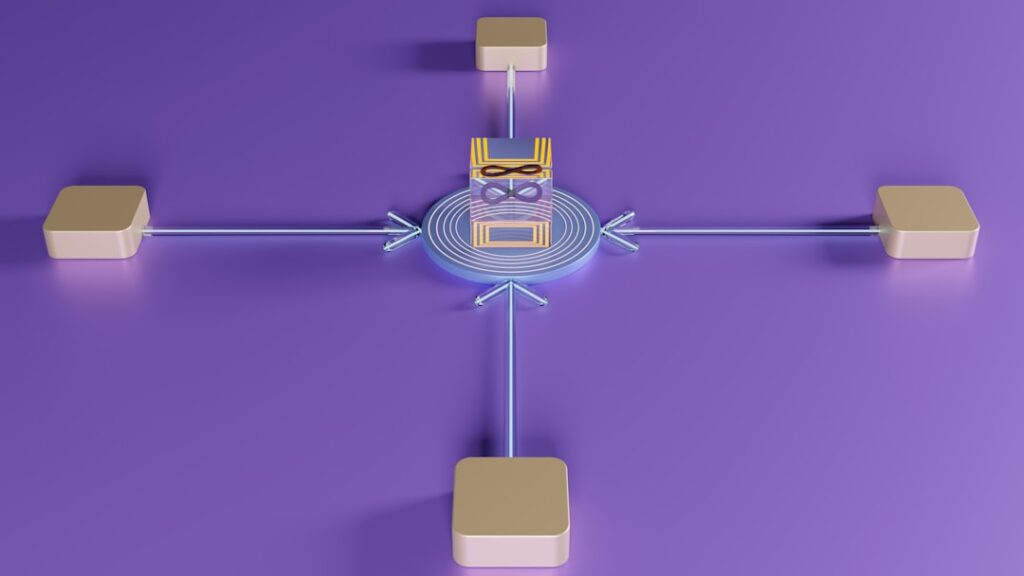
Bloating code forces security teams to acquire more tools to monitor the expanding surface. On average, firms now manage a large number of vendors supplying those tools, a figure that has risen in tandem with the average number of security solutions per organization. This proliferation creates integration gaps, licensing overhead, and contradictory policies—each a vector for breach.
Studies of breach post-mortems show that configuration errors account for a significant share of successful attacks, and the CCM’s final axis quantifies this risk by linking alert volume to error rates.
The CCM’s third axis tracks the ratio of tools to alerts and the vendor count per tool category. When the matrix shows a high tool-to-alert ratio, it signals that the stack is becoming unsustainable. For example, a health-tech startup that added new security tools within a single quarter found its incident response times increase, simply because alerts now bounced between disparate dashboards. The CCM highlights this misalignment, urging consolidation before the cost spiral becomes irreversible.
Human Error Susceptibility
You may also like
 AI & Technology
Why Investors Must Adapt to AI-Driven Market Changes
AI stocks are reshaping market dynamics, necessitating a shift in investment strategies as volatility increases and performance diverges across the sector.
Read More →Even the most sophisticated automation cannot fully compensate for human fatigue. As alert streams swell, analysts experience “alert fatigue,” leading to missed or mis-prioritized incidents. Studies of breach post-mortems show that configuration errors account for a significant share of successful attacks, and the CCM’s final axis quantifies this risk by linking alert volume to error rates.
Take the case of a cloud-service provider that introduced a new logging library across all micro-services. The added complexity required developers to update IAM policies in numerous places. One overlooked policy left a storage bucket publicly readable, a mistake that went undetected for weeks because the SOC was swamped by low-severity alerts. The CCM would have flagged the surge in policy-related alerts and the corresponding rise in error probability, prompting a pre-emptive audit.
How the CCM Guides Decision-Making
When plotted together, the four axes of the CCM expose feedback loops that would otherwise remain hidden. An organization that sees high Alert Volume Inflation but low Critical Risk Amplification might be tolerating noise without immediate danger, yet the third axis—Tool & Vendor Proliferation—could already be inflating costs. Conversely, a modest alert increase paired with a sharp rise in critical findings signals that a single dependency is introducing systemic weakness.
Our view is that the CCM serves as both a diagnostic and a prescriptive tool: by identifying which axis is the dominant driver, leadership can allocate resources—whether that means refactoring code, pruning dependencies, consolidating tools, or investing in analyst training—where they will have the greatest risk-reduction payoff.
By making the matrix a regular fixture on the executive dashboard, the hidden costs of code bloat become visible, manageable, and—most importantly—reducible.
The Limits of the Cybersecurity Complexity Matrix
The CCM does not capture every nuance of an organization’s threat landscape; it does not, for instance, model nation-state actors’ targeted campaigns or the financial incentives behind zero-day markets. Moreover, the matrix relies on accurate telemetry; organizations lacking mature logging may underestimate their position on the axes. Finally, while the CCM highlights where bloat creates risk, it does not prescribe the exact technical steps for code reduction, leaving that to engineering judgment.
You may also like
 AI & Technology
Claude Engages Religious Leaders, OpenAI Issues Warnings
Anthropic engages religious leaders to shape AI ethics, while OpenAI warns against potential risks, highlighting contrasting approaches in AI governance.
Read More →To move from insight to action, we recommend that every security leader conduct a quarterly CCM assessment, charting the four axes against concrete metrics, and then prioritize one “bloat-reduction sprint” that targets the highest-scoring component. By making the matrix a regular fixture on the executive dashboard, the hidden costs of code bloat become visible, manageable, and—most importantly—reducible.