No products in the cart.

AI Progress Halted by Safety Sabotage
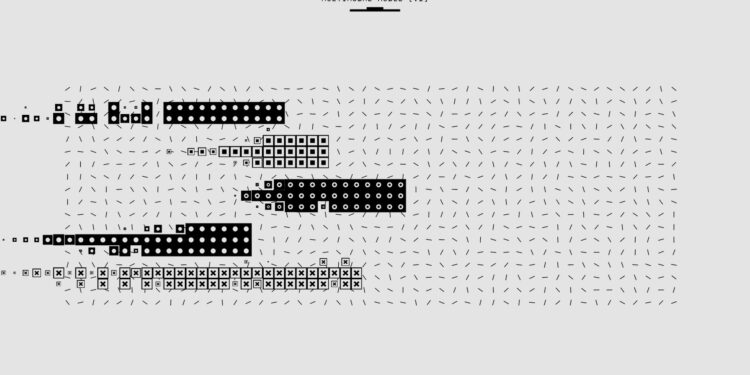
The relentless race for larger AI models often erodes safety, creating a paradox where speed fuels vulnerability. Introducing the AI Safety Paradox Index, we propose a measurable way to align progress with robust safeguards.

The most aggressive race for larger models often yields the weakest safety nets.
Speed as a structural asymmetry
The engineering culture that dominates contemporary AI labs treats iteration count as the primary metric of success. Teams measure progress in “tokens per day” and “parameter scaling curves,” while safety considerations are relegated to optional checklists. This asymmetry is not accidental; it is baked into funding contracts that reward headline-grabbing benchmarks with milestone payments. The result is a feedback loop where each new release compresses the window for rigorous testing, and the pressure to publish before competitors leaves little room for systematic risk assessment.
When the industry celebrated 2025 as the year of AI hype, the underlying trajectory was already set: a relentless push toward capability without a proportional investment in guardrails. The pattern persists into 2026, where the same velocity that fuels market excitement also amplifies the likelihood of oversight.
Safety measures create new attack surfaces

Paradoxically, the very mechanisms introduced to curb risk can generate fresh vulnerabilities. Joal Stein observes, “We focus on building systems that expect mistakes rather than trying to perfect the human element.” This design philosophy, while pragmatic, assumes that error detection can be isolated from the core model. In practice, monitoring layers, automated red-team scripts, and reinforcement-learning-based alignment modules become additional code paths that adversaries can probe.
Consider a scenario where an AI-driven content filter is trained to flag disallowed language. The filter’s decision engine is itself a neural network, subject to adversarial examples that can bypass detection while preserving the original output. The defensive wrapper, intended to protect, becomes a vector for exploitation. Moreover, the integration of external APIs for safety verification introduces dependency risks: a compromised third-party service can corrupt the entire safety pipeline without altering the primary model.
In practice, monitoring layers, automated red-team scripts, and reinforcement-learning-based alignment modules become additional code paths that adversaries can probe.
You may also like
 AI & Technology
AI Shopping Agents Force Brands to Innovate Sales Strategies
AI shopping agents are revolutionizing retail marketing. Brands must adapt their strategies to engage with these digital consumers effectively. This shift not only changes how…
Read More →The empirical record underscores this tension. Human error accounts for a significant portion of cybersecurity breaches, reflecting how auxiliary systems—often built for safety—are as fallible as the humans who design them. The paradox deepens when organizations treat safety components as afterthoughts rather than foundational elements, leading to brittle architectures that crumble under sophisticated attacks.
Profit incentives amplify the paradox
The financial architecture of AI ventures reinforces the progress-safety conflict. Venture capitalists allocate capital on the basis of projected revenue from model licensing, API usage, and downstream applications. Short-term return expectations prioritize rapid deployment, because each additional month of market presence translates into measurable cash flow.
A typical seed round may stipulate a “product-market fit” deadline within twelve months, a timeline that forces engineering teams to ship before comprehensive safety audits can be completed. The incentive structure also rewards headline metrics—such as the number of parameters or benchmark scores—over qualitative assessments of alignment. Consequently, firms that excel at scaling quickly accrue disproportionate market share, while those that invest heavily in safety lag behind, regardless of the long-term societal cost.
The AI Impact Summit scheduled for February 2026 will convene ten AI company leaders under a banner of responsible development. Yet the very presence of these leaders in a single photograph underscores the concentration of influence among a handful of profit-driven entities. Their collective decisions will shape regulatory signals, and the prevailing narrative remains that progress must outpace precaution.
Reframing development with the AI Safety Paradox Index
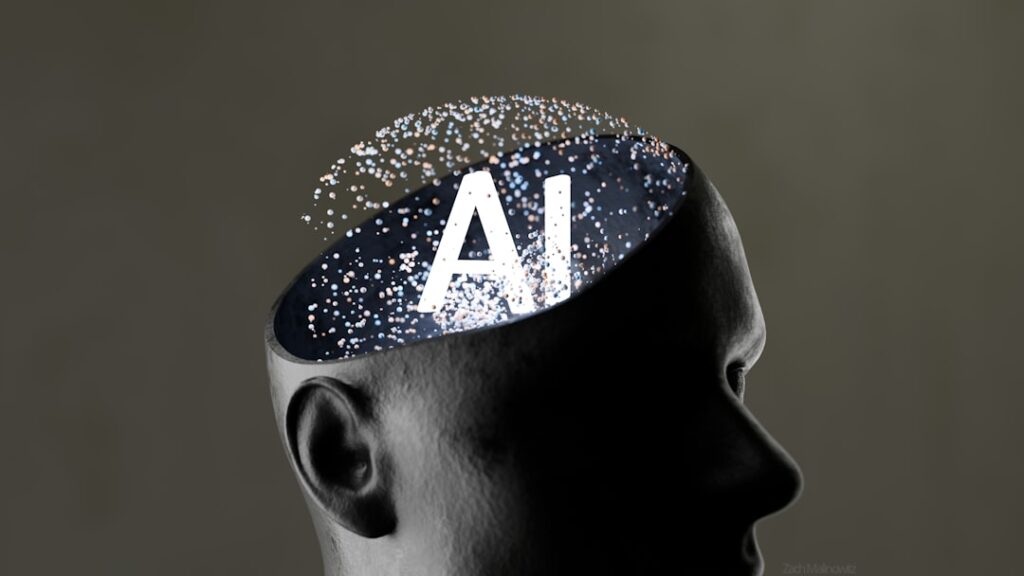
To navigate the entrenched conflict, we propose the AI Safety Paradox Index (ASPI), a composite metric that quantifies the tension between speed of deployment and robustness of safety controls. The ASPI aggregates three dimensions: (1) Iteration Velocity—measured by the average time between model releases; (2) Safety Layer Complexity—the count of independent safety modules and their integration depth; and (3) Risk Exposure Ratio—the proportion of identified failure modes that remain unmitigated after each release. A higher ASPI signals a greater paradoxical gap, prompting investors and board members to recalibrate expectations.
The AI Impact Summit scheduled for February 2026 will convene ten AI company leaders under a banner of responsible development.
Our analysis applies the ASPI retrospectively to several high-profile launches between 2025 and 2026. Companies that achieved rapid scaling in 2025 exhibit ASPI scores indicating a significant paradoxical gap. In contrast, firms that deliberately paced releases to incorporate iterative safety testing achieved lower ASPI scores, reflecting a more balanced trajectory.
You may also like
 AI & Technology
Musk Renames SpaceXAI to SpaceXSI Amid Super Intelligence Buzz
This shift shows a growing trend in tech towards integrating superintelligence into various applications, especially in aerospace. The new terminology marks a significant change from…
Read More →We argue that embedding the ASPI into funding agreements can align incentives with long-term resilience. Venture contracts could tie tranche releases to predefined ASPI thresholds, ensuring that capital flows only when safety progress keeps pace with model advancement. Moreover, regulatory bodies might adopt the ASPI as a baseline compliance indicator, supplementing existing audit frameworks.
Our view is that without a quantifiable gauge like the ASPI, the industry will continue to oscillate between over-optimistic deployment and reactive firefighting. By making the paradox visible and measurable, stakeholders gain a lever to shift the equilibrium toward responsible innovation.
The paradox of AI progress will not dissolve through rhetoric alone. It demands structural realignment—where speed is no longer the sole currency, and safety is encoded as a core asset rather than an optional accessory. The ASPI offers a pragmatic pathway to that realignment, turning an abstract tension into an actionable metric.
We must accept that the fastest routes to market are not synonymous with the safest.
The path forward requires collective commitment. We must accept that the fastest routes to market are not synonymous with the safest. Only by integrating the AI Safety Paradox Index into the fabric of investment, governance, and engineering can the industry reconcile ambition with responsibility.
The paradox will persist as long as progress is measured in isolation from safety; the moment we treat them as co-dependent variables, the trajectory of AI will become sustainable.
You may also like
 AI & Technology
Swim and Bathe Confidently with Temple Adhesive
Deepinder Goyal's insights on the Temple device highlight its innovative adhesive technology, ensuring it remains secure during swimming and showering.
Read More →