No products in the cart.

Federal Approval of Indiana Education Spending Waiver Expands State Flexibility, Triggers Accountability Debate

Department of Education granted Indiana a waiver allowing broader use of federal education funds, including for school‑choice initiatives.

The U.S. Department of Education granted Indiana a waiver allowing broader use of federal education funds, including for school‑choice initiatives. The decision has prompted scrutiny from state auditors and education stakeholders.
The federal government approved Indiana’s request for a waiver that relaxes federal spending restrictions on K‑12 education programs. The waiver permits the state to reallocate Title I and other federal monies to align with Indiana’s education priorities, notably expanding school‑choice options such as charter schools and voucher programs. The approval was announced during the Trump administration, making Indiana one of the states to receive such flexibility under that policy framework.
State officials, the Department of Education, and the Office of the Auditor of Indiana were central to the process. Indiana’s Department of Education submitted the waiver request, which was reviewed and authorized by the U.S. Department of Education under Secretary Betsy DeVos. The decision was publicized in a federal notice and subsequently reported by regional news outlets. Shortly after the waiver’s issuance, Indiana Auditor Tera Sand released a comprehensive audit of school‑choice spending, highlighting concerns about the oversight and cost‑effectiveness of programs funded through the newly flexible federal dollars.
Waiver Approval and Legislative Context
The waiver follows a broader federal initiative launched in 2018 that allowed states to apply for flexibility in the use of Title I funds, provided they met certain accountability standards. Indiana’s application emphasized its intent to direct resources toward “high‑performing schools, innovative instructional models, and expanded school‑choice opportunities” as outlined in the state’s education strategic plan.
The Department of Education’s approval process required Indiana to submit a detailed implementation plan, demonstrate how the waiver would maintain or improve student outcomes, and establish monitoring mechanisms. The federal review concluded that Indiana’s plan satisfied the statutory criteria for flexibility, leading to the formal waiver issuance.
Auditor Sand’s subsequent report examined expenditures under Indiana’s school‑choice programs, including voucher allocations and charter school funding. The audit identified gaps in financial tracking, questioned the cost‑benefit ratio of certain initiatives, and called for stronger state‑level oversight to ensure that federal dollars achieve intended educational results. The findings have been cited by legislators and education advocacy groups in ongoing debates over the waiver’s impact on accountability.
The Department of Education’s approval process required Indiana to submit a detailed implementation plan, demonstrate how the waiver would maintain or improve student outcomes, and establish monitoring mechanisms.
Process Leading to the Waiver

Indiana initiated the waiver request in late 2019, compiling data on student performance, enrollment trends, and projected fiscal impacts of reallocated funds. The state’s Education Department coordinated with the Indiana Office of Management and Budget to align the waiver proposal with existing state financing formulas.
You may also like
 News
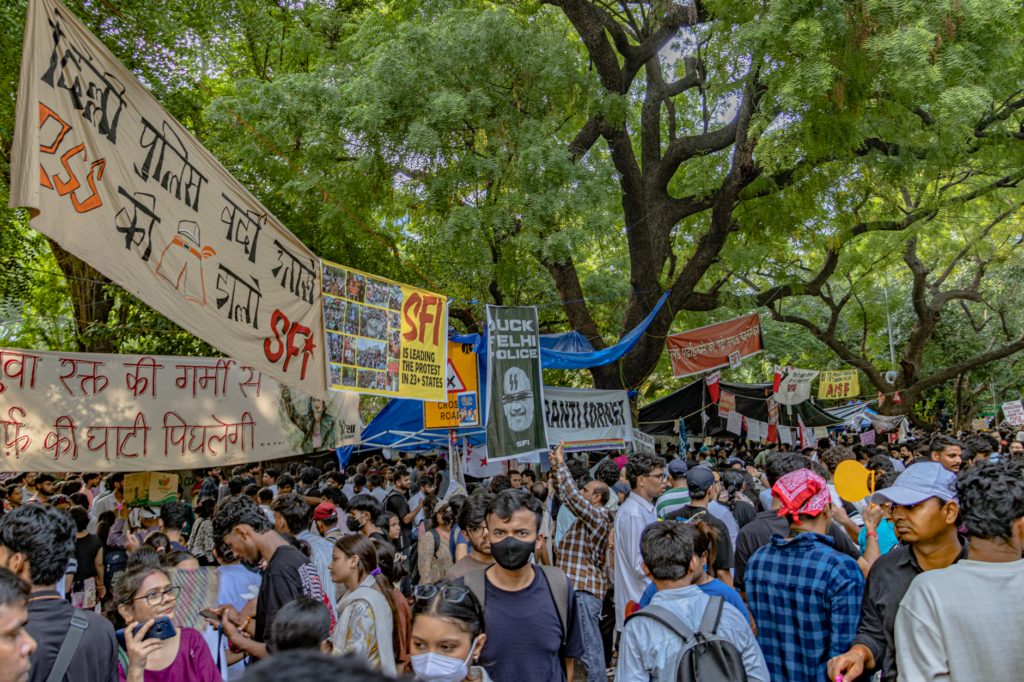
NewsIndia’s Gen-Z Protests Prompt Education Minister’s Resignation
Mass rallies by students and the Cockroach Janta Party from June 6 to July 25, 2026 forced the resignation of Education Minister Dharmendra Pradhan.
Read More →The federal review involved inter‑agency consultations, including input from the Office of Management and Budget and the Department of Education’s Office of Federal Student Aid. After a series of communications and revisions, the waiver was formally approved in early 2020, as indicated in the federal notice released by the Department of Education.
Following approval, Indiana’s education agencies began integrating the waiver provisions into budget cycles for the 2020‑2021 school year. Concurrently, the state auditor’s office launched a targeted audit of school‑choice expenditures to assess compliance with both state and federal requirements.
Immediate Impact on Indiana’s Education System
The waiver allows Indiana school districts to divert a portion of federal Title I funds to support charter schools, voucher recipients, and other school‑choice mechanisms without violating federal spending rules. Districts that opt into the flexibility can reallocate up to 10 percent of their federal allotment for these purposes, subject to state‑level reporting standards.
For students, the change expands the pool of publicly funded options beyond traditional public schools, potentially increasing access to alternative instructional environments. Educators in participating schools may receive additional resources for curriculum development, technology upgrades, and professional development aligned with the state’s strategic objectives.
However, the auditor’s findings have raised concerns among policymakers about the adequacy of existing financial controls. Auditor Sand recommended that the Indiana Department of Education adopt more rigorous tracking systems and conduct periodic performance reviews of school‑choice programs funded through the waiver. State legislators have referenced the audit in hearings, emphasizing the need to balance flexibility with transparent stewardship of federal funds.
Educators in participating schools may receive additional resources for curriculum development, technology upgrades, and professional development aligned with the state’s strategic objectives.
Reactions from Stakeholders

Education advocacy groups supporting school choice have welcomed the waiver, citing the ability to tailor resources to high‑need students and innovate instructional models. Conversely, teacher unions and some public‑school administrators have expressed reservations, noting that the reallocation could reduce funding for traditional public schools and complicate accountability frameworks.
The Indiana Senate Education Committee scheduled a hearing in March 2020 to discuss the auditor’s report and to consider legislative measures that would strengthen oversight of waiver‑related spending. No immediate legislative changes have been enacted, but the discussion underscores the ongoing tension between flexibility and fiscal responsibility.
You may also like
 News
NewsKarnataka Announces India’s First Government‑Run AI University and AI Hub
Karnataka announced plans for a state‑run AI University and AI Hub, aiming to become an AI‑native state and boost its startup ecosystem.
Read More →Outlook for Funding and Accountability
The waiver remains in effect for the duration of the current federal education funding cycle, with a mandatory review slated for the next congressional appropriations period. Indiana must submit annual compliance reports to the Department of Education, documenting how reallocated funds are used and the outcomes achieved.
Auditor Sand’s recommendations are expected to influence future state budgeting practices, potentially prompting the adoption of a centralized data‑management platform for tracking school‑choice expenditures. The state’s ability to maintain the waiver depends on meeting both federal performance criteria and state‑level accountability standards.
Key Facts
What: Federal approval of Indiana’s education spending waiver permits flexible use of Title I funds, including for school‑choice programs.
Auditor Sand’s recommendations are expected to influence future state budgeting practices, potentially prompting the adoption of a centralized data‑management platform for tracking school‑choice expenditures.
When: The waiver was approved in early 2020.
Impact: Indiana schools can redirect federal dollars to alternative education models, while state auditors call for stronger oversight to ensure accountability.
You may also like
 News
NewsTwo‑Thirds of India’s AI Professionals Anticipate Layoffs as Tech Job Cuts Accelerate
The anonymous professional networking platform Blind released survey results on 7 July 2026 indicating that two‑thirds of AI and machine learning professionals based
Read More →Sources
- Indiana becomes the latest state to receive flexibility from Trump on federal education spending – Hazleton Standard Speaker
- Auditor Sand’s report sparks debate over school choice spending – AOL.com