No products in the cart.

Gravity‑Defying Partnerships: How Cross‑Sector Coalitions Are Restructuring Space Entrepreneurship

Cross‑sector alliances are converting orbital access into a systemic utility, lowering entry costs, spawning hybrid career pathways, and prompting a quasi‑market regulatory framework that will shape the space economy beyond 2030.

Unconventional alliances between legacy aerospace firms, venture‑backed startups, and non‑space industries are converting orbital access from a strategic monopoly into a systemic utility, reshaping career pathways and capital flows across the global economy.
The Post‑Cold‑War Democratization of Orbital Access
Since the 1990s, the United States’ National Space Policy has shifted from a security‑first posture to a “commercial priority” framework, a transition mirrored in the European Union’s Horizon‑Space programme and China’s “dual‑use” launch strategy. This policy pivot created a regulatory substrate that allowed private launch providers to enter a market once dominated by national agencies. Data from the Office of Space Commerce indicate that the global space economy, valued at $469 billion in 2023, is projected to exceed $1 trillion by 2040, with private‑sector revenue accounting for 58% of that growth [5].
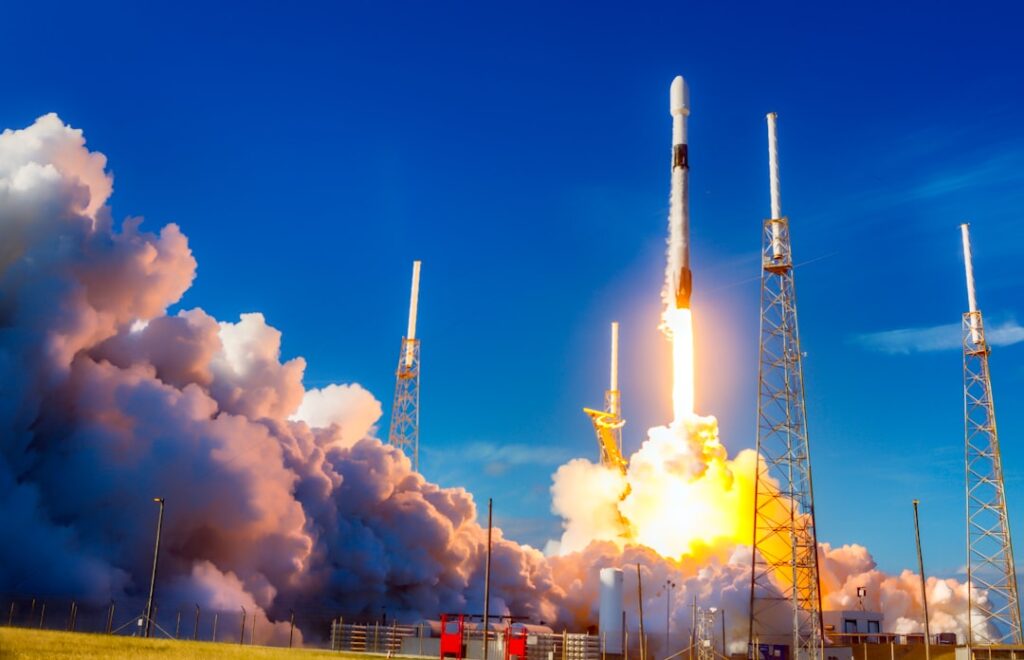
The macro‑context is therefore one of structural de‑centralization: orbital capacity is no longer a sovereign asset but a market commodity. Historical parallels can be drawn to the deregulation of the U.S. airline industry in the late 1970s, which transformed air travel from an elite service into a mass‑market utility, catalyzing ancillary industries and new labor categories. In space, the “New Space” wave—embodied by SpaceX’s reusable Falcon 9 and Rocket Lab’s Electron—has lowered the cost per kilogram to low‑Earth orbit from $10,000 in 2010 to under $2,000 in 2023, a reduction that redefines entry thresholds for startups and research institutions alike [4].
Cross‑Sector Co‑Creation Networks

The core mechanism driving this democratization is the emergence of cross‑sector co‑creation networks that blend aerospace engineering with software, materials science, and even consumer‑goods expertise. Traditional prime contractors such as Boeing and Airbus have launched “innovation studios” that embed venture‑backed startups within their supply chains, sharing launch‑vehicle data APIs and providing access to test‑flight facilities.
Simultaneously, non‑space corporations—ranging from telecommunications firms to agritech companies—are investing in satellite constellations to secure data streams for their core businesses. A notable example is the partnership between a leading agribusiness and a nanosatellite startup to deliver hyperspectral imagery for precision farming, a collaboration that reduced the agribusiness’s data acquisition cost by 62% relative to legacy providers [3].
The cumulative effect is a “technology‑affordance cascade” where each incremental reduction in launch cost or development time expands the feasible set of entrants, echoing the “network externalities” observed in the early internet era.
You may also like
 Entrepreneurship & Business
Nike
Nike's recent sales slump has prompted its CEO to reconsider strategies, significantly impacting marketing and product management roles. Understanding the implications for consumer engagement and…
Read More →Open‑source hardware initiatives, such as the Open Space Foundation’s “LibreSat” platform, further accelerate this diffusion. By publishing schematics for modular bus architectures under permissive licenses, they enable small firms to assemble mission‑ready payloads without bespoke engineering cycles. The cumulative effect is a “technology‑affordance cascade” where each incremental reduction in launch cost or development time expands the feasible set of entrants, echoing the “network externalities” observed in the early internet era.
Economic Spillovers Across Non‑Space Verticals
The systemic implications extend beyond the orbital marketplace. Spin‑off technologies—radiation‑hardening processes, high‑precision additive manufacturing, and AI‑driven trajectory optimization—are being repurposed in healthcare (e.g., portable MRI devices), finance (real‑time risk modeling using satellite‑derived climate data), and education (virtual reality labs powered by low‑latency satellite links). A 2022 OECD analysis estimated that for every dollar invested in commercial launch services, $3.4 of secondary economic value is generated in downstream sectors [6].
New business models are also proliferating. Subscription‑based “Space‑as‑a‑Service” platforms allow enterprises to lease orbital capacity on a per‑mission basis, akin to cloud‑computing models. Companies such as Astra and Firefly Aerospace have launched “launch‑on‑demand” portals that match payload providers with available rideshare slots, reducing procurement lead times from 18 months to under six.
Regulatory adaptation is a critical structural component of this shift. The Federal Aviation Administration’s Office of Commercial Space Transportation (AST) revised its licensing framework in 2022 to incorporate risk‑based assessments, streamlining approval for rideshare missions and lowering administrative overhead by 35% [5]. Internationally, the United Nations Committee on the Peaceful Uses of Outer Space (COPUOS) is drafting a “Space Services Treaty” that codifies liability and data‑sharing standards for private actors, signaling a move toward a quasi‑market governance model.
Career Capital Reallocation in the New Space Labor Market
These structural changes are reconfiguring career capital across multiple dimensions. Traditional aerospace engineering pathways—characterized by long tenure at a single prime contractor—are giving way to fluid, portfolio‑based careers. Data from the Space Workforce Survey 2023 shows a 27% increase in professionals who have held roles in both a launch provider and a non‑space startup within the past five years [1].
The demand for hybrid skill sets—combining systems engineering with software development, data analytics, and regulatory compliance—is reshaping educational pipelines.
The demand for hybrid skill sets—combining systems engineering with software development, data analytics, and regulatory compliance—is reshaping educational pipelines. Universities such as MIT and Caltech have launched “Space Systems Design” concentrations that integrate entrepreneurship modules, while community colleges are offering certifications in satellite‑payload integration, reflecting a “skill‑democratization” trend comparable to the rise of coding bootcamps in the early 2010s.
You may also like
 AI & Technology
AI‑driven skill churn reshapes career capital
A measurable share of mid‑skill roles face redesign, prompting a race between talent pipelines and corporate retraining.
Read More →From an institutional power perspective, labor unions that once represented aerospace machinists are negotiating collective bargaining agreements that include provisions for equity participation in startup ventures, thereby aligning worker incentives with the equity‑driven capital structures of New Space firms. This shift mirrors the “employee‑ownership” movements in the tech sector that accelerated after the 2008 financial crisis, suggesting a broader trajectory toward distributed ownership in high‑technology industries.
Projected Trajectory to 2030: Institutional Realignment and Talent Flows
Looking ahead, three converging forces will define the 3‑5‑year trajectory of space entrepreneurship:
- Scale‑Economy Convergence – As launch‑cost curves flatten, we anticipate a consolidation of rideshare platforms into a handful of “orbit‑logistics hubs” that will function analogously to maritime container ports, offering standardized docking, fueling, and data‑downlink services. By 2029, the International Space Logistics Alliance (ISLA) is projected to handle 65% of all low‑Earth‑orbit payloads, establishing a de‑facto regulatory benchmark.
- Talent Magnetism Toward Hybrid Roles – The proportion of “dual‑competency” professionals—those holding both an engineering credential and a business or policy qualification—is expected to rise from 12% in 2024 to 24% in 2029, driven by employer incentives such as “innovation‑share” bonuses and cross‑industry secondments. This reallocation of human capital will deepen the systemic coupling between space and terrestrial industries.
- Policy‑Driven Market Stabilization – The forthcoming Space Services Treaty, slated for ratification by 2027, will introduce standardized liability caps and data‑access mandates. Early adopters of the treaty’s provisions are projected to experience a 15% reduction in insurance premiums and a 10% increase in foreign direct investment, reinforcing a feedback loop that stabilizes market entry for mid‑size firms.
Collectively, these dynamics suggest that by 2030 the space sector will function as a systemic utility embedded within the broader economic fabric, with career pathways and capital flows that are no longer siloed but integrated across multiple domains of innovation.
[Insight 2]: Cross‑sector co‑creation networks—linking aerospace, software, and non‑space industries—create technology‑affordance cascades that accelerate diffusion and generate secondary economic value.
Key Structural Insights
[Insight 1]: The reduction of launch cost per kilogram below $2,000 has transformed orbital access from a strategic monopoly into a market commodity, mirroring the deregulation of commercial aviation in the late 20th century.
[Insight 2]: Cross‑sector co‑creation networks—linking aerospace, software, and non‑space industries—create technology‑affordance cascades that accelerate diffusion and generate secondary economic value.
[Insight 3]: Institutional realignment, evidenced by evolving FAA licensing and the upcoming Space Services Treaty, will embed space entrepreneurship within a quasi‑market governance model, reshaping career capital toward hybrid, equity‑linked roles.
Sources
The Astropreneurial Co‑creation of the New Space Economy — ScienceDirect
PDF The Astropreneurial Co‑creation of the New Space Economy — NewSpace Economy
Space, entrepreneurship, Disruptive technologies — LinkedIn
Space Entrepreneurship: Private Ventures and New Frontiers — Beyond Tomorrow
Resources for Space Entrepreneurs — Office of Space Commerce
OECD Report on Economic Impact of Commercial Space Activities — OECD Publishing*
You may also like
 AI & Technology
Apple’s AI Strategy Excluded from Trump’s Guest List
This absence is notable for several reasons. First, it highlights Apple's unique approach to AI compared to its competitors.
Read More →