No products in the cart.

Rupee Hits Record Low of 95.31 Against Dollar
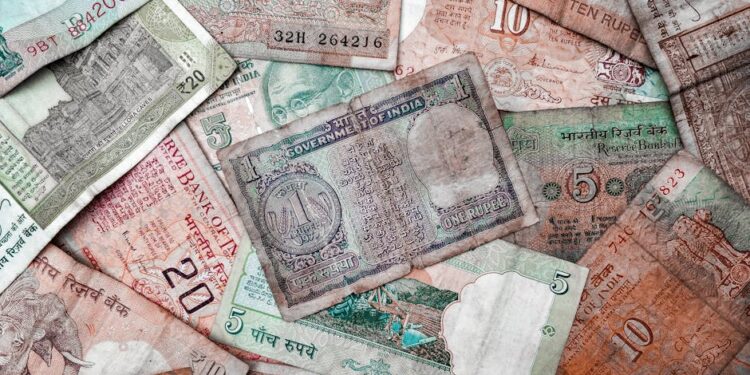
The Indian rupee has hit a record low of 95.31 against the U.S. dollar, driven by foreign capital outflows and rising oil prices. This decline raises concerns about economic stability and market reactions.


Mumbai, India — The Indian rupee has plunged 82 paise to close at an all-time low of 95.31 against the U.S. dollar. This significant drop comes amid a strengthening U.S. dollar and heightened foreign capital outflows, which have pressured the local currency. Forex traders noted that the rupee opened at 94.97, fluctuating between 94.87 and 95.34 before settling at its record low.
The decline follows geopolitical tensions, particularly after U.S. President Donald Trump rejected Iran’s response to a peace proposal, which led to a surge in crude oil prices. As oil prices rise, the cost of imports increases, further straining the rupee. Prime Minister Narendra Modi’s recent call for austerity measures, including a slowdown in gold purchases and foreign travel, has also contributed to negative market sentiment.
Market Reactions to the Rupee’s Plunge
The market reacted strongly to the rupee’s decline. The Sensex, a key stock market index, fell by 1,312.91 points, or 1.70%, closing at 76,015.28. Similarly, the Nifty index dropped 360.30 points, or 1.49%, to settle at 23,815.85. Such a sharp decline in the stock market reflects investor concerns about the economic outlook amid the rupee’s fall.
According to Deccan Herald, foreign institutional investors sold equities worth ₹4,110.60 crore on May 8, indicating a lack of confidence in the Indian market. This trend of capital outflow is likely to continue if the rupee remains under pressure, as investors seek more stable environments for their investments.
Global Factors Influencing the Rupee
The global economic landscape plays a crucial role in the rupee’s performance. The strengthening of the U.S. dollar is attributed to rising interest rates and inflationary pressures in the United States. As the dollar strengthens, emerging market currencies, including the rupee, tend to weaken.
Global Factors Influencing the Rupee The global economic landscape plays a crucial role in the rupee’s performance.
Additionally, the ongoing conflict in West Asia has implications for oil prices, which directly impact India’s import costs. Brent crude prices surged to $103.8 per barrel, exacerbating the situation for the rupee. The Indian economy, heavily reliant on oil imports, faces increased costs, which can lead to inflationary pressures domestically.
You may also like
 Government & Policy
Adam Schiff’s AI Regulation Proposals and Their Impact on Free Speech
California Senator Adam Schiff's proposals for AI regulation emphasize the need for a dedicated agency to oversee AI technologies, ensuring transparency and protecting free speech.…
Read More →As per Deccan Chronicle, the Indian government may need to consider policy adjustments to stabilize the currency. This could involve intervention in the forex market or adjustments in interest rates to curb inflation and support the rupee. However, such measures come with their own set of challenges and potential repercussions for economic growth.
Domestic Economic Implications
The rupee’s decline has significant implications for the Indian economy. A weaker currency can lead to higher import costs, which may drive inflation. This could affect consumer spending and overall economic growth, as higher prices for goods and services put pressure on households.
Moreover, the Reserve Bank of India (RBI) may be compelled to take action to support the rupee. This could include raising interest rates to attract foreign capital, but higher rates could also slow down economic growth. Balancing these competing interests will be a critical challenge for policymakers in the coming months.
According to Times Now, the RBI’s foreign exchange reserves have already seen a decline, dropping by $7.794 billion to $690.693 billion in the week ending May 1. This decrease in reserves limits the RBI’s ability to intervene in the forex market effectively, making it increasingly difficult to stabilize the rupee.
This could affect consumer spending and overall economic growth, as higher prices for goods and services put pressure on households.
Long-Term Outlook for the Rupee
The long-term outlook for the rupee remains uncertain. While some analysts suggest that a correction may occur if global conditions stabilize, others warn of persistent pressures due to ongoing geopolitical tensions and economic uncertainties. The rupee’s fate will largely depend on the global economic environment and domestic policy responses.
As the situation evolves, the Indian government and the RBI will need to closely monitor the impact of these developments on the economy. Strategic planning and timely interventions will be essential to mitigate risks and support the rupee.
In the face of these challenges, the question remains: how will India’s economic policies adapt to a changing global landscape? The ability to navigate these turbulent waters will be crucial for maintaining economic stability.
You may also like
 Government & Policy
Biden-Era Memo on Covid and Schools Set Off Dispute
A recent memo from the Biden administration regarding Covid-19 guidelines for schools has ignited a significant legal dispute within the Justice Department, raising questions about…
Read More →Implications for Consumers and Businesses
The rupee’s decline affects everyone in India, from consumers facing rising prices to businesses grappling with increased costs. Understanding these dynamics can help individuals and companies prepare for potential economic shifts.