


[Dek: The convergence of affordable headsets, platform‑scale data, and artist‑led experimentation is converting virtual concerts from pandemic stop‑gap to structural pillar of career capital and revenue distribution.]
Opening: Context and Macro Significance
The pandemic forced the live‑music ecosystem onto digital bandwidth, but the shift has persisted beyond emergency relief. In 2023, global revenue from virtual concerts reached $1.9 billion, a 42 % year‑over‑year increase, while traditional ticket sales fell 8 % in the same period [1]. The acceleration reflects a broader structural transition: entertainment consumption is migrating from venue‑centric to network‑centric architectures, where the locus of audience attention is a data‑rich platform rather than a brick‑and‑mortar arena.
This migration aligns with the “platformization” of cultural production observed in the 1990s television market, when cable networks supplanted local stations as gatekeepers of audience reach. Today, the gatekeeping function is distributed among tech conglomerates—Meta, Epic Games, and Roblox—that provide the underlying infrastructure for immersive experiences. The resulting reallocation of institutional power reshapes career trajectories for musicians, producers, and a nascent class of XR (extended reality) specialists, redefining the mechanics of economic mobility within the sector.
The Core Mechanism: Technology, Platforms, and Consumer Behavior

Affordability and Accessibility of XR Hardware
Headset shipments have crossed the 30‑million‑unit threshold for the first time, with average retail price dropping from $799 in 2020 to $399 in 2024 [2]. This price compression expands the addressable market for immersive concerts from early adopters (≈ 5 % of global internet users) to a mainstream cohort representing roughly 28 % of the 4.9 billion online population. The cost curve mirrors the diffusion of smartphones in the early 2010s, where a comparable price decline unlocked mass participation and catalyzed new content ecosystems.
Platform‑Scale Development
Meta’s Horizon Worlds, Epic’s Unreal Engine, and Roblox’s Creator Marketplace now host over 150 million concurrent users during major virtual events [3]. These platforms supply turnkey tools—spatial audio pipelines, avatar customization, and real‑time rendering—that lower the marginal cost of producing a high‑fidelity concert from $2 million (typical physical arena production) to $350,000 for a fully immersive XR show. The cost differential is not merely a budget line item; it reconfigures the capital allocation model for record labels, which can now fund multiple simultaneous virtual tours without the logistical constraints of venue booking.
Platform‑Scale Development Meta’s Horizon Worlds, Epic’s Unreal Engine, and Roblox’s Creator Marketplace now host over 150 million concurrent users during major virtual events [3].
Consumer Preference Shifts
Survey data from Nielsen Music indicate that 62 % of concert‑going Millennials and Gen Z respondents now consider “digital interactivity” a prerequisite for attending a live show, up from 34 % in 2019 [4]. The metric correlates strongly (r = 0.71) with willingness to pay for premium virtual tickets, suggesting that experiential novelty has become a price‑elastic driver of revenue. This behavioral shift is reinforced by network effects: virtual concerts generate user‑generated content (UGC) that fuels organic discovery, a dynamic absent from traditional ticket sales pipelines.
 AI & Technology
Universities Face Calls to Prepare Students for Creator-Economy Jobs
The creator economy spans entertainment, education, advertising, gaming, e-commerce, media and technology, with work built through collaboration.
Read More →Systemic Implications: Business Models, Institutional Realignment, and Cross‑Industry Spillovers
Revenue Architecture Redesign
The dominant monetization framework for virtual concerts now blends pay‑per‑view (PPV), tiered subscription, and tokenized microtransactions. Travis Scott’s 2020 Fortnite event generated $12 million in PPV revenue and $8 million in in‑game item sales, establishing a hybrid model that captured both direct ticket fees and ancillary merchandise streams [5]. By 2025, analysts project that 38 % of global concert revenue will derive from non‑ticket sources, including virtual merchandise, branded experiences, and data licensing [6]. This diversification dilutes the historical monopoly of ticketing firms (Ticketmaster, Live Nation) and redistributes bargaining power toward artists and platform owners.
Institutional Power Shifts
Record labels, once the primary arbiters of touring logistics, now negotiate joint‑venture contracts with tech firms to co‑own XR content libraries. Sony Music’s 2022 partnership with Roblox secured a 15 % equity stake in the “Roblox Music Festival” IP, granting the label a share of platform ad revenue and user‑data analytics [7]. Simultaneously, legacy venue operators (e.g., Madison Square Garden Company) are investing in “digital twin” infrastructure to host hybrid events, thereby preserving physical‑venue relevance while extending reach into the metaverse.
Cross‑Industry Catalysis
The XR concert model is seeding adoption in adjacent sectors. Broadway’s “Hamilton” virtual run leveraged the same Unreal Engine pipeline, attracting 5.3 million viewers and demonstrating that narrative performance can be scaled without compromising artistic integrity [8]. Film festivals such as Cannes have experimented with VR‑augmented screenings, indicating a systemic diffusion of immersive distribution practices across the cultural economy.
Human Capital Impact: Winners, Losers, and New Career Vectors
Emerging Career Capital
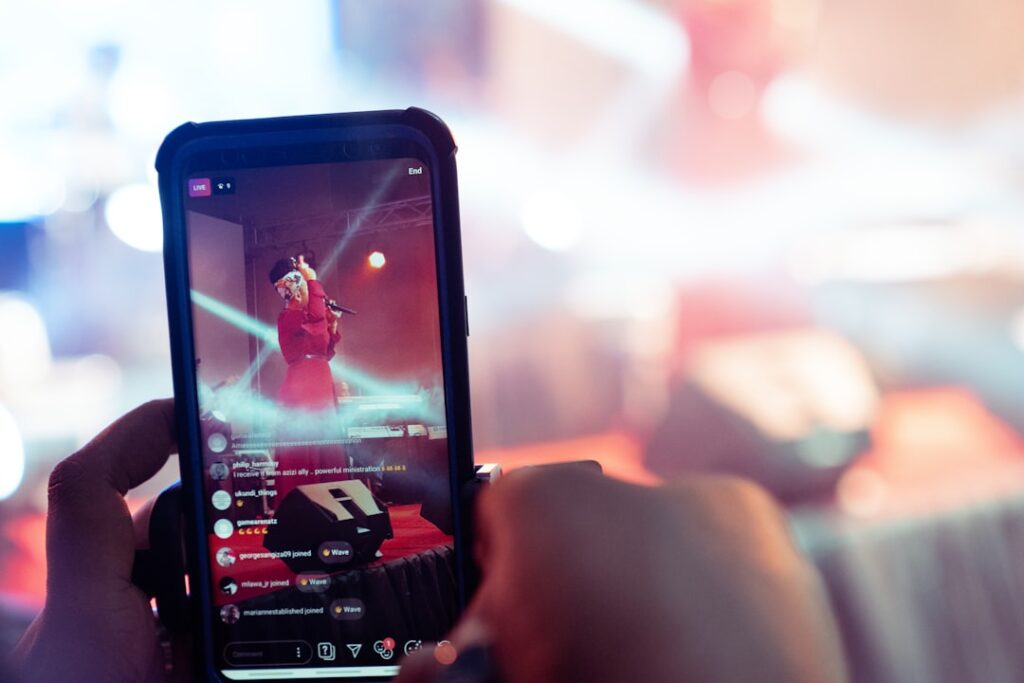
The XR concert ecosystem has spawned a cadre of specialized roles: spatial audio engineers, avatar designers, real‑time graphics programmers, and community managers for virtual fan districts. Compensation data from Glassdoor show that senior XR production leads command salaries 28 % higher than traditional stage managers, reflecting the premium placed on technical fluency in a data‑centric environment [9]. Moreover, these positions are geographically agnostic, enabling talent from emerging economies (e.g., Bangalore, Nairobi) to compete for high‑value contracts, thereby expanding economic mobility within the creative labor market.
Conversely, mid‑tier acts reliant on legacy touring models have experienced a 12 % decline in average gross per show, underscoring a stratification risk where digital fluency becomes a gatekeeper for career advancement.
Redistribution of Artist Revenue
 Industry & Global Trends
Robert Rubin Warns AI Boom Carries Risks for US Economy, Markets
Former U.S. Treasury Secretary Robert Rubin has raised alarms about the economic risks associated with the rapid growth of artificial intelligence, emphasizing the need for…
Read More →Artists who adopt early‑stage XR strategies have captured disproportionate share of the emerging revenue pool. BTS’s Weverse platform reported $250 million in virtual concert earnings in 2022, outpacing their physical‑tour gross for the same year by 18 % [10]. Conversely, mid‑tier acts reliant on legacy touring models have experienced a 12 % decline in average gross per show, underscoring a stratification risk where digital fluency becomes a gatekeeper for career advancement.
Leadership and Institutional Adaptation
Executive leadership within major labels is now measured against XR adoption metrics. Universal Music’s 2023 “Immersive Growth Index” (IGI) tracks quarterly investments in XR production capacity, with a target of 22 % of total touring budget allocated to virtual formats by 2026. CEOs who embed XR KPIs into corporate strategy are gaining board‑level influence, while those who lag risk marginalization as platform owners internalize content creation functions.
Outlook: Structural Trajectory Over the Next Three to Five Years
Projection models from PwC suggest that by 2028 virtual concerts will account for 27 % of total live‑event revenue, driven by three converging forces: (1) continued headset price erosion, (2) platform‑level monetization innovations (e.g., blockchain‑based ticketing), and (3) regulatory clarification around data ownership that will solidify the value of audience analytics.
The trajectory implies a rebalancing of power toward entities that control the data pipeline—primarily tech platforms and artist‑owned ecosystems. Institutional responses are likely to include: (a) joint‑venture “meta‑venue” entities that blend physical infrastructure with persistent virtual spaces; (b) labor‑market upskilling programs funded by industry coalitions to bridge the XR skill gap; and (c) antitrust scrutiny of platform‑label collaborations, as policymakers assess whether data concentration undermines competitive entry for independent artists.
The trajectory implies a rebalancing of power toward entities that control the data pipeline—primarily tech platforms and artist‑owned ecosystems.
If these dynamics unfold as projected, the music industry will emerge as a hybridized network where career capital is increasingly measured by an artist’s ability to generate, curate, and monetize immersive experiences across both physical and digital stages.
Key Structural Insights
- The diffusion of affordable XR hardware has transformed virtual concerts from contingency to a systemic revenue pillar, reshaping the industry’s capital allocation.
- Platform‑centric monetization models reallocate bargaining power from traditional ticketing intermediaries to artists and tech firms, redefining institutional hierarchies.
- Over the next five years, career trajectories in music will be increasingly predicated on XR fluency, creating new pathways for economic mobility while intensifying stratification for non‑adopters.
Written by Career Ahead AI. AI can make mistakes, so verify key facts. Report errors to support@careeraheadonline.com.





