Global shocks are driving food inflation in the UK, revealing vulnerabilities in the economic system. This has major implications for consumers and the economy.
The Bank of England has warned that food inflation in the UK could reach 7% by the end of 2026. This alarming forecast highlights the fragility of Britain’s economic systems in the face of global shocks. Rising prices reflect deeper vulnerabilities in how the UK manages its resources and responds to international pressures.
As energy prices surge due to geopolitical tensions, the cost of essential goods, including food, is also impacted. The interconnectedness of global supply chains means that disruptions in one region can have cascading effects worldwide. For instance, the ongoing conflict in the Gulf has led to increased prices for energy and fertilizers, which are crucial for food production.
The UK’s reliance on imported food and energy makes it particularly susceptible to these shocks. As prices rise, consumers face the brunt of these economic pressures, with many struggling to afford basic necessities. This situation raises questions about the long-term sustainability of the UK’s economic model.
Global Events and Local Price Sensitivity
Recent events have shown how sensitive the UK economy is to global dynamics. The energy crisis, exacerbated by conflicts in oil-producing regions, has led to a sharp increase in production costs. These costs are passed on to consumers, resulting in higher prices at the supermarket checkout.
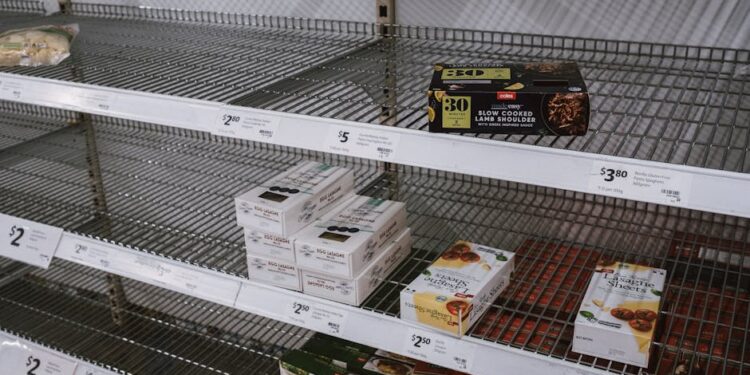
Furthermore, the UK has not built sufficient resilience into its food supply systems. The government has prioritized efficiency over security, leading to minimal buffer stocks. This lack of preparedness means that when a shock occurs, the effects are felt immediately and intensely.
This connection underscores the need for a reevaluation of how the UK approaches food security and economic stability.
The UK’s food system is tightly linked to international markets. As global prices fluctuate, so too do local prices. This connection underscores the need for a reevaluation of how the UK approaches food security and economic stability.
Balancing Resilience and Efficiency
The current crisis has sparked a debate about the balance between resilience and efficiency in economic planning. Historically, the UK has favored a lean supply chain model, which reduces costs but increases vulnerability. This approach may work well in stable conditions but fails during times of crisis.
Experts argue that the UK must rethink its priorities. Investing in resilience, such as building strategic reserves of food and energy, could mitigate the impact of future shocks. The need for a more robust economic framework has never been clearer, as the current system exposes citizens to significant risks.
The public’s perception of economic security is shifting. As food prices rise and essential goods become less accessible, citizens are demanding more from their government. This shift may lead to increased pressure on policymakers to address these vulnerabilities head-on.
This lack of focus may hinder the development of effective policies that address the root causes of economic vulnerability.
Political Responses to Rising Food Prices
Political leaders are beginning to recognize the implications of rising food prices and economic instability. Ed Miliband, the energy secretary, has been vocal about the need for a comprehensive strategy that links economic security to national security. His approach suggests that the government must take a proactive stance in safeguarding the economy against external shocks.
However, the political narrative around these issues remains fragmented. Many politicians are focused on immediate concerns like the cost of living and healthcare, rather than the systemic risks that threaten long-term stability. This lack of focus may hinder the development of effective policies that address the root causes of economic vulnerability.
As the situation evolves, it will be crucial for leaders to unite around a common vision for economic resilience. Failing to do so could lead to public disillusionment and a loss of trust in government institutions.
Implications for Consumers and Businesses
The ongoing rise in food inflation has significant implications for both consumers and businesses. Households are feeling the pinch as their purchasing power diminishes. As food prices rise, families may have to make difficult choices about their spending, impacting overall economic growth.
Understanding these trends will be crucial for businesses looking to navigate this uncertain landscape.
As public transport systems increasingly adopt digital payment methods, users without smartphones are at a disadvantage. A letter from a concerned citizen in Scotland noted…
Businesses, particularly those in the food and retail sectors, are also facing challenges. Higher input costs may lead to reduced profit margins, prompting some companies to pass these costs onto consumers. This creates a cycle of inflation that can be hard to break.
The long-term effects of this inflationary period could reshape consumer behavior. People may begin to prioritize essential goods over discretionary spending, leading to shifts in market dynamics. Understanding these trends will be crucial for businesses looking to navigate this uncertain landscape.



 Entrepreneurship & Business

Government & Policy