A Boston federal judge ruled on August 13, 2026, that the government’s civil-rights claim against Harvard was unsupported, ending a three-year legal effort by the Trump administration.
A Boston federal judge ruled on August 13, 2026, that the government’s civil-rights claim against Harvard was unsupported. The decision ends a three-year legal effort by the Trump administration to compel the university to adopt new anti-bias measures.
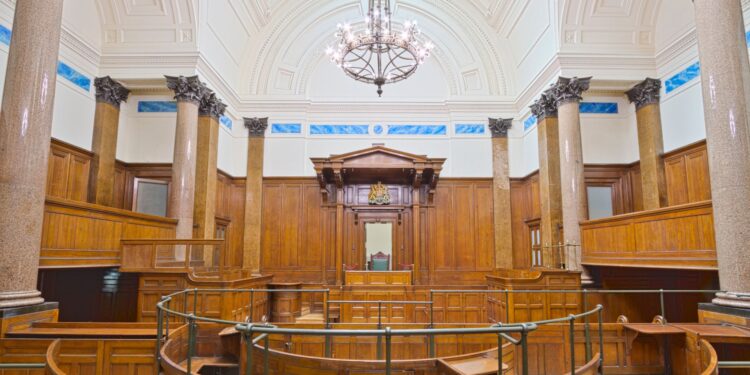
A federal judge in Boston dismissed the Trump administration’s lawsuit alleging that Harvard University violated federal civil-rights statutes by allowing antisemitic incidents on campus. The dismissal was entered on Thursday, August 13, 2026, after a hearing in the United States District Court for the District of Massachusetts [1]. Harvard, located in Cambridge, Massachusetts, was the sole defendant in the case [1].
The plaintiff was the federal government under the administration of former President Donald J. Trump, which had filed the suit in 2023 alleging repeated antisemitic harassment at Harvard. The presiding judge, U.S. District Judge Martha M. Sullivan, issued a written opinion concluding that the government’s evidence was “too isolated and episodic” to establish a pattern of civil-rights violations [1]. The court’s analysis focused on specific incidents cited by the government, finding them insufficient to demonstrate that Harvard’s policies or practices systematically failed to protect Jewish students [3].
Legal Background and Court Findings
The lawsuit originated after the Department of Education’s Office for Civil Rights (OCR) issued a “Notice of Findings” in 2022, asserting that Harvard had not adequately responded to reported antisemitic conduct [2]. The administration’s complaint sought injunctive relief, demanding that Harvard revise its campus climate policies, implement mandatory bias-training, and submit to ongoing federal monitoring [1].
During the trial, the government presented testimony from several Harvard students who reported harassment, as well as internal university documents describing disciplinary actions taken in response to specific incidents [2]. Harvard’s legal team countered that the university had investigated each report, applied its existing conduct codes, and imposed sanctions where appropriate [2].
The court’s analysis focused on specific incidents cited by the government, finding them insufficient to demonstrate that Harvard’s policies or practices systematically failed to protect Jewish students [3].
Judge Sullivan’s opinion emphasized that the incidents described were “discrete events” rather than evidence of a pervasive institutional problem [3]. The ruling noted that the OCR’s findings relied heavily on anecdotal reports without demonstrating a consistent failure by Harvard to enforce its own policies [1]. Consequently, the court concluded that the government had not met the statutory burden required to prove a civil-rights violation under Title VI of the Civil Rights Act [1].
Implications for Higher Education
Federal Judge Dismisses Trump Administration Antisemitism Lawsuit Against Harvard University
Anup Bagchi, with over three decades in financial services, is set to lead HDFC Bank starting October 27, 2026, following the retirement of Sashidhar Jagdishan.
The dismissal removes an immediate federal enforcement action against Harvard, allowing the university to continue operating under its current policies without the mandated changes sought by the administration [4]. For students, the decision means that existing campus reporting mechanisms and disciplinary procedures remain in place, with no new federal oversight imposed [2].
Universities nationwide monitoring similar civil-rights complaints may reference the ruling when assessing the evidentiary standards required to sustain federal lawsuits alleging systemic bias [3]. The case underscores the judicial requirement that plaintiffs demonstrate a pattern of institutional failure rather than isolated incidents [1].
Higher-education administrators are likely to review the court’s reasoning to ensure that internal investigations are thoroughly documented and that policy responses are consistently applied, thereby reducing vulnerability to future federal actions [2]. The decision also signals to civil-rights agencies that the threshold for proving widespread violations on campus remains high, potentially influencing the scope of future OCR inquiries [4].
Key Facts
What: A federal judge dismissed the Trump administration’s antisemitism lawsuit against Harvard University.
For students, the decision means that existing campus reporting mechanisms and disciplinary procedures remain in place, with no new federal oversight imposed [2].
When: August 13, 2026.
Impact: The ruling leaves Harvard’s existing policies unchanged and clarifies evidentiary standards for future civil-rights actions on college campuses.
World food prices surged in September 2026, reaching their highest level in nearly four years due to extreme weather conditions and rising agricultural input costs.…



 News
NewsNews