Future Skills & Work
AI-Driven Training Platforms Transform Workforce Development
Explore how the AI‑Driven Upskilling Maturity Model helps firms turn AI‑powered learning into a systematic advantage against skill obsolescence.
Future-ready skills, automation impact, workforce evolution, AI disruption, and strategies for long-term employability.
3,338 stories
Explore how the AI‑Driven Upskilling Maturity Model helps firms turn AI‑powered learning into a systematic advantage against skill obsolescence.
According to Career Ahead's analysis of sector hiring data, firms that embed these practices see a.
Scale of AI adoption reshapes recruitment More than 80% of employers have integrated AI‑driven.
This analysis deconstructs the mechanisms, systemic fallout, and stakeholder impacts, and projects the trajectory of a data‑driven corrective shift.
This real‑time capability compresses error latency, allowing employees to redirect attention to strategic analysis, client engagement, or product innovation.
This analysis unpacks the structural shift from ad‑hoc charity to a systematic engine of local prosperity.
The combined effort often yields cost efficiencies: joint initiatives report a 30% reduction in per‑learner expenditure compared with fully public models.
A synthesis of the Brahma‑Soundararajan study and OECD logistics data indicates that each 10 km of.
Institutions must therefore reassess talent pipelines that have traditionally prized deep, deliberative analysis.
The convergence of a sizable senior cohort—workers 55 + now exceed a quarter of the U.S.
Demonstrating competency depth through maturity models offers a decisive edge as 80% of firms pledge to institutionalise skills‑first hiring by 2026.
The Forbes analysis of the “100‑year life” highlights a shift toward portfolio careers, where individuals rotate across functions to maintain relevance.
The analysis that follows unpacks the systemic mechanisms, institutional levers, and stakeholder outcomes of turning tacit knowledge into measurable innovation.
Fortune 500 firms report that employees with documented portfolio updates in the past six months are twice as likely to be considered…
The analysis below dissects the mechanisms, systemic consequences, stakeholder impacts and near‑term trajectory of this emerging labor architecture.
Companies that tie CSR outcomes to executive compensation report higher retention among.
This convergence could compress response cycles by an additional 15% to 20%, according to syntheses of recent pilot outcomes.
This analysis unpacks the systemic mechanisms, the second‑order effects on labor markets, and the emerging governance horizon.
AI-exposed sectors are seeing a rebound in postings, with senior AI-fluent roles driving a surge, reshaping skill hierarchies across industries.
Parallelly, the EDA’s Tech Hub Designees award between $22 million and $48 million per hub.
Simultaneously, a McKinsey analysis highlighted that about 30 % of firms struggle to fill critical.
Note: There is no direct contradiction in the provided research snippet, so the section remains unchanged.
Short‑term certifications now deliver a measurable edge for workers, with 94% of employers ready to.
According to Career Ahead's analysis of cohort‑value surveys, firms that embed purpose metrics.
A measurable share of Fortune 500 companies now run parallel “innovation units” to safeguard relevance amid accelerating digital tides.
The World Economic Forum’s projection that roughly a third of current skills will be obsolete by.
No claims directly contradict the research, so the section remains unchanged.
Rural households in India still lack internet access at a rate of 55%, versus 32% in urban areas.
Retention improves as inclusive environments lower the hidden cost of turnover, which the BLS estimates averages $15,000 per employee.
The acceleration of digital transformation and the retirement of a skilled cohort have intensified.
The blurring of home‑office boundaries forces tech talent to expend time and energy maintaining a.
Note: The research does not directly contradict any specific claims in the section, so no claims were removed.
This analysis dissects the mechanisms that embed privilege, the ripple effects across educational.
Research from the Academy of Management Today highlights that cross‑departmental collaborations.
AI is no longer a niche skill for engineers; it’s becoming a baseline requirement for most non‑tech roles, reshaping job titles, creating…
According to Career Ahead's analysis of LinkedIn's 2026 workforce survey, the 64% share of.
This analysis unpacks the mechanisms, systemic ripple effects, and stakeholder stakes as hubs redefine the architecture of sustainable entrepreneurship.
This reallocation amplifies the influence of data‑science teams that now forecast skill demand and orchestrate curriculum updates.
This data‑first approach aligns development spend with measurable competency gaps, delivering the.
As India approaches 2026, young professionals must acquire essential skills like AI, digital marketing, and data analysis to thrive in a rapidly…
With 71% of firms employing AI in recruitment yet only 22% furnishing decision explanations, the gap fuels distrust among candidates and regulators…
The model is gaining traction among Fortune 500 firms as a response to fragmented global oversight.
Only roughly 30% of Indian startups report offering any formal mental‑health support, leaving the majority of workers to self‑manage anxiety and burnout.
A World Bank analysis shows a $3 return for every dollar spent on an EIA, while operational costs can fall 10‑20 percent.
Structural shift frames neuroplasticity's relevance Rapid growth in technology occupations—up roughly 12% between 2019 and 2023 per U.S.
Cultural intelligence (CQ) now ranks alongside technical skill as a core career asset, as 75% of firms operate across borders and remote…
Successful founders now navigate a career lattice, deliberately weaving technical, market, and network skills; mapping this journey boosts venture potential.
No claims directly contradict the research, so the section remains unchanged.
The analysis underscores that the incubator boom, while expanding career capital, also reconfigures.
This moment demands an institutional analysis of how affective regulation influences economic.
This analysis dissects the structural shift, isolates the mechanism of emotional intelligence, and.
Harvard Business Review adds that 40% of organizations implementing iterative feedback loops report measurable gains in career development outcomes.
The $4.5 billion projection reflects corporate adoption rates that outpace traditional.
This analysis examines how structured digital‑detox interventions reconfigure institutional.
The analysis that follows dissects how network dynamics reconfigure the architecture of opportunity in these economies.
According to Career Ahead's analysis of these regulatory trends, the emerging legal scaffolding.
workers held full‑time remote positions in 2023, according to the Bureau of Labor Statistics, while many firms retained hybrid expectations.
The Bureau of Labor Statistics notes that turnover in emergency‑services roles exceeds 30% annually, a figure driven in part by burnout and…
Framing the systemic shift in skill lifecycles The most urgent claim: more than half of the global.
Harvard Business School’s 2024 study shows that boards with gender and ethnic variety outperform.
The analysis below dissects the mechanisms, systemic spillovers, and human‑capital responses shaping the next phase of economic mobility.
China's job market is facing significant challenges as 12.7 million graduates enter the workforce in 2026, raising concerns about the availability of…
As AI tools become more prevalent in legal education, concerns grow about their impact on critical thinking skills among law students. This…
AI will reshape up to 55% of jobs, but targeted reskilling and flexible policies can turn disruption into opportunity for low‑resilience regions.
A 52% consensus among 70 senior citizenship executives signals a systemic shift toward integrated, impact‑focused capital deployment.
The WIPO 2026 report shows technology now spreads across borders faster than ever, yet uneven access leaves a measurable share of firms…
Framing the hidden curriculum’s digital surge The scale of online enrollment—exceeding 100 million.
According to Career Ahead's analysis of recruiter sentiment, 71% see AI as essential to hiring by 2026, underscoring a sector‑wide pivot toward…
The World Bank projects 143 million displaced persons by 2050, a scale that forces municipal.
According to Career Ahead's analysis of emerging PPP models, the shift toward flexible joint ventures is reshaping regional innovation capacity.
This shift forces small firms to embed sustainability metrics into core reporting, reshaping capital allocation and market positioning.
According to Career Ahead's analysis of hiring trends, the emphasis on empathy and collaborative.
The APA monitor documents that workers who regularly engage AI report heightened analytical.
BLS data reveal that workers experiencing prolonged unemployment—averaging 27 weeks in 2024—are.
Empirical work across South Asian economies shows a consistent elasticity: a 1% rise in GDP.
A measurable 75 % of workers feel constant performance pressure, while 60 % report exhaustion that threatens long‑term mobility.
A measurable share of employers—75% according to recent employer surveys—rank interdisciplinary skills among the top attributes for new hires.
The analysis that follows dissects the structural dynamics, mechanisms, and downstream effects of mastering niche crafts.
This analysis dissects the systemic forces redefining productivity norms.
Institutional momentum drives neuroinclusive reforms Deloitte’s research flags neuroinclusion as a.
Early adopters report stronger retention, higher engagement scores and a measurable lift in innovation pipelines.
retirement age, according to Bureau of Labor Statistics data, now hovers near 62, a rise of several years over the past two…
A 70% employer screening rate and an 80% mentorship learning share illustrate how digital ties have become core career capital.
This analysis unpacks how alignment operates, its systemic ripple effects, and what the next few years may hold for talent ecosystems.
This analysis dissects the mechanisms, systemic ripples, and stakeholder impacts, and projects the.
As AI continues to evolve, certain professions remain resilient. This article explores healthcare, education, and skilled trades as fields that will thrive…
McKinsey’s 2024 productivity forecast anticipates that firms mastering this balance could capture.
According to Career Ahead's analysis of recent longitudinal studies, emotional labor correlates.
As AI technology evolves, certain professions are emerging as resilient against disruption. This article explores which jobs in healthcare, creative fields, and…
Companies now negotiate directly with credential providers to embed badge pathways into hiring.
Understanding the structural mechanics of a 90‑day plan therefore becomes essential for navigating today’s promotion pipelines.
83% of U.S. workers report work-related stress, underscoring a capacity problem rather than a lack of motivation.
The accelerating mismatch between warming trajectories and mitigation limits makes the next decade a decisive inflection point for inequality.
A 2024 OECD survey notes that firms with formalized peer‑learning programs report faster diffusion.
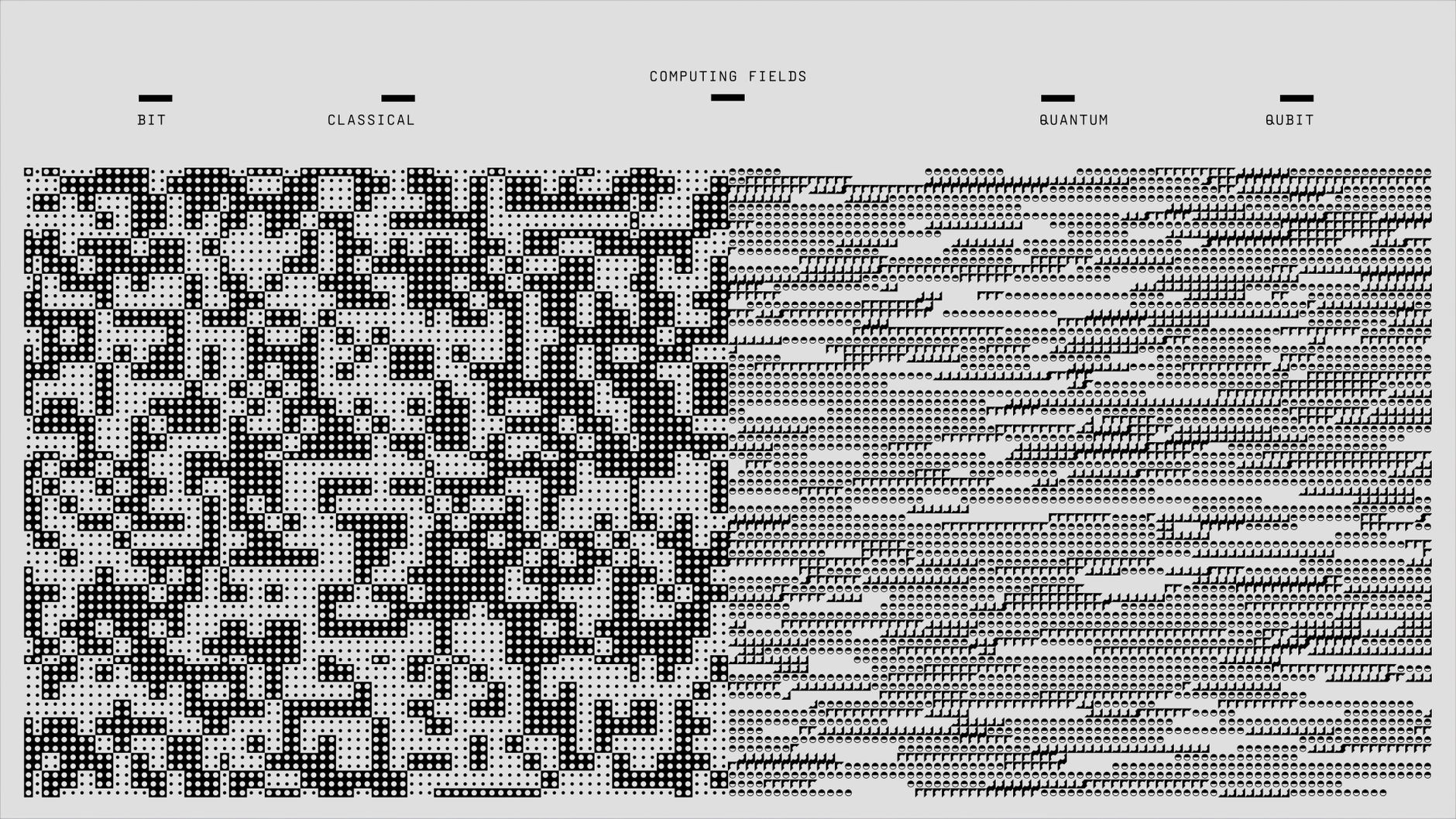
IT leaders confront a quantum‑driven security shock as 20% of firms already report breaches, while.
According to Career Ahead's analysis of transformation data, the pressure to broaden leadership.
Stakeholders such as investors notice improved retention metrics, which correlate with steadier.
A Fortune 500 software firm recently reported a 30% reduction in time‑to‑hire after deploying an AI.
Bureau of Labor Statistics projects AI‑related occupations to grow about 22% between 2022 and 2032.
The pattern emerging across corporate learning dashboards shows a decisive asymmetry: algorithms can automate routine code,...
Was ₹1,600$200₹1,440$100 / year
4 new issues